


West Bay Woodturners Newsletter is a monthly update on the club activities. This free resource is available to beginner and professional woodturners.
Next Meeting
Wednesday, July 15, 2026, 7pm
Bridges Community Church
(second floor meeting room)
625 Magdalena Ave
Los Altos, CA 94024

Program
- Introductions of guests and new members
- Program: Ask me anything and extended Show and Tell
There were many lively discussions during the break at the June meeting, and I was hesitant to terminate the break for the President’s Challenge and Show and Tell. So this month’s program will be an impromptu ask me anything session, and an extended show and tell. Bring your finished items to show off, your work in progress for consultation, or just questions about process, tools, technique… - Break
- Reminders and updates
- Review of “President’s Challenge” items
- Show & Tell
President’s Challenge
June: lidded hollow form (with or without threads)

Upcoming Programs
These are tentative, and yet to be committed to a date.
- Escoulen class and chuck review (Bud Trapp and Claude Godcharles)
President’s Message
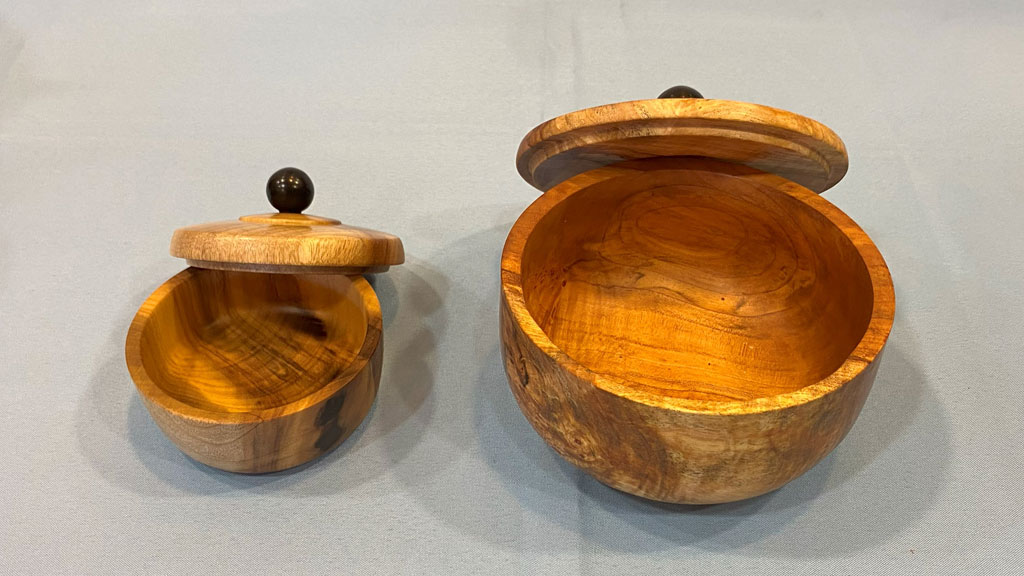
A recent commission gave me the opportunity to work with a timber that I had never turned before: quaking aspen (Populus tremuloides).
The commission was for a fifth wedding anniversary gift—traditionally the “wood” anniversary. The clients requested that it be made from quaking aspen because they were married among stands of these trees in Wyoming, giving the species special personal significance.
I accepted enthusiastically. Quaking aspen is one of those wonderfully pale timbers (along with holly and some coast live oak) that I find especially appealing. As I could not source it locally, I purchased a clean, freshly cut log.
Quaking aspen is a relatively soft wood, and this log was still very wet. I was concerned that I would not be able to dry it sufficiently before the anniversary deadline. In the end, I obtained three usable blanks from the log: the primary centerpiece bowl, a “backup” bowl, and a small blank destined to become a child’s porringer.
The initial rough turning was discouraging. Despite sharp tools and sound technique, the wood exhibited extensive tear-out. The fibers were simply too wet to shear cleanly; instead, they folded over and tore. Fortunately, once the blanks had dried, the timber behaved much better. A light sanding removed the remaining raised grain, leaving crisp, clean surfaces.
One of my primary goals was to preserve the naturally pale color of the wood. Because aspen is also quite soft, I felt that a low-luster finish would better suit both the material and the simple forms of the bowls. While they are fully finished, I consider them display pieces rather than everyday utilitarian ware.
Choosing the finish required some experimentation. I narrowed the options to two Osmo Polyx-Oil products: Raw Matte and Clear Satin. The Raw Matte was the obvious choice for the backup bowl, whose partial natural edge complemented the understated finish beautifully. Its success gave me confidence to use it on the porringer, which, having been cored from well away from the pith, remained almost uniformly white.
For the main bowl, whose more contemporary profile suggested a slightly richer appearance, I initially considered the Clear Satin. Before committing, however, I tested it on a separate piece of aspen. The result was striking: the finish imparted a pronounced amber cast, completely changing the character of the wood. That simple test almost certainly saved the centerpiece bowl.
The Raw Matte formulation contains a small amount of white pigment that offsets much of the natural ambering produced by the oil itself. The porringer retained an almost snow-white, creamy appearance, while the centerpiece bowl—cut somewhat closer to the center of the tree—revealed subtle mineral streaks that added quiet visual interest without sacrificing the overall lightness of the timber.
To achieve the final appearance I wanted, I applied a single topcoat of Liberon Black Bison Wax (Natural) and buffed it by hand. The result is a soft, understated sheen that complements both the pale color and the gentle character of this remarkable wood.
This project presented many challenges—timber, timing, and tear-out—but the greatest challenge was not mastering an unfamiliar wood. It was discovering what made this particular timber beautiful, and then ensuring that every decision, from form to finish, served to reveal rather than obscure those qualities.
– Edgar Whipple, President
Woodturning Book Library
A large library of woodturning, woodworking, and carving books is available to WBW members as part of our partnership with the Santa Clara Valley Carvers. Browse the online catalog, reserve a book or two, and pick them up at our next meeting. Some books feature galleries for inspiration, and some describe hands-on turning techniques.
Last Meeting Review
Wednesday June 17, 2026
Woodturners newsletter notes by Laura Rhodes; pictures by Angela Gunn and Roman Chernikov.
Announcements
- Guests: Daniel
- Edgar offered anyone to try an air.microclimate powered respirator (PAPR). This was originally provided to Silicon Valley Woodturners as an industrial sample. Edgar didn’t like it because he wasn’t able to easily raise the face shield to examine his work. Vic Mitnick concurred with this assessment.
- Bud Trapp had purchased a Klingspor sandpaper bargain box. Edgar sliced up samples for anyone interested but noted that they are too stiff to bend easily to fit in grooves while sanding.
- Kirk DeHeer will be coming to Maker Nexus on Sunday, September 13th for an all-day demo. The cost will be $30.00 for members of either club.
- Jim Koren is looking into doing a bulk buy of TransTint dyes following Mark Koenig’s SVW presentation on coloring with dyes. So far, he has three people signed up. They will divide the bulk buy into two-ounce bottles.
Demonstration – Denis Lillis
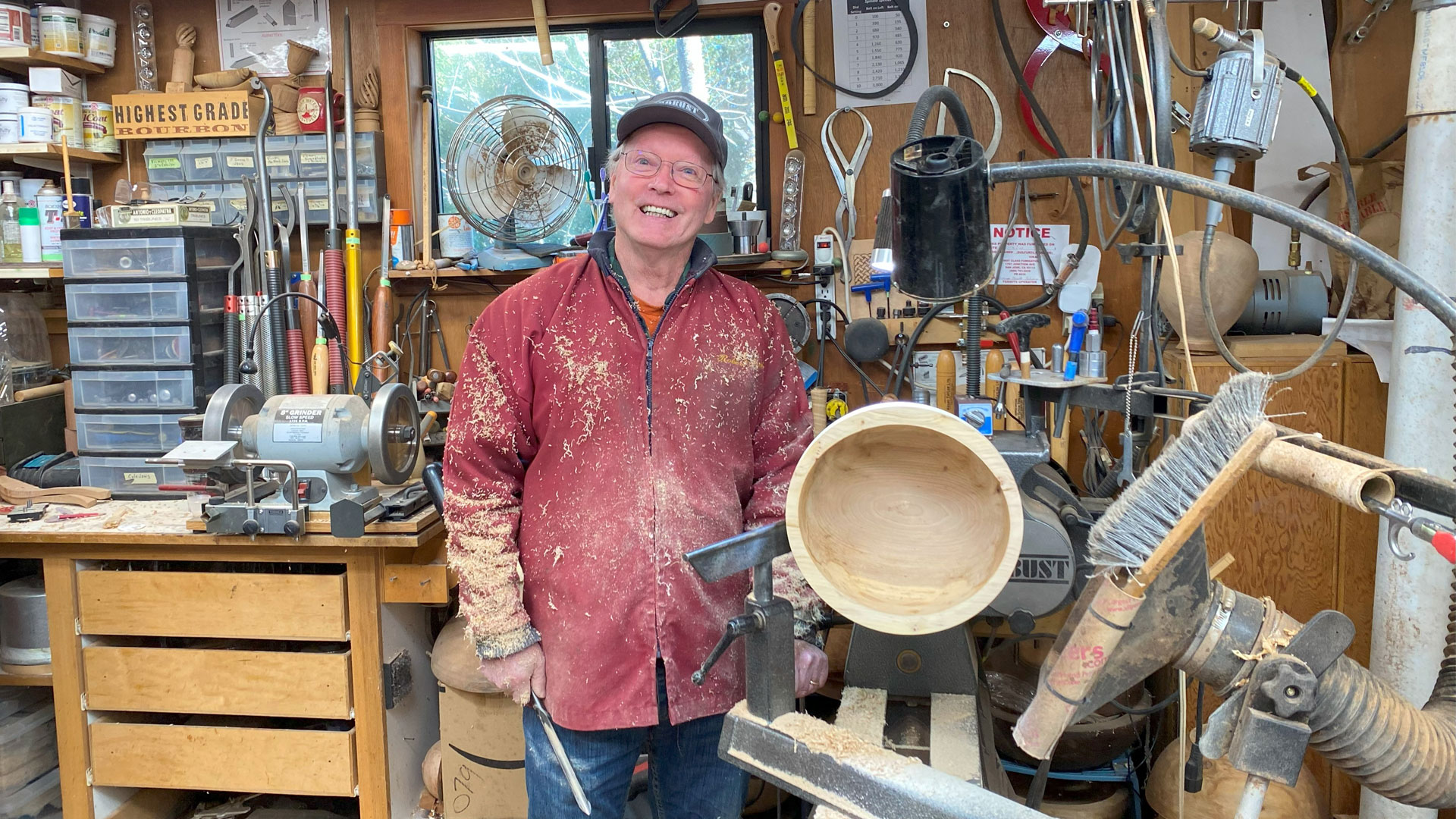
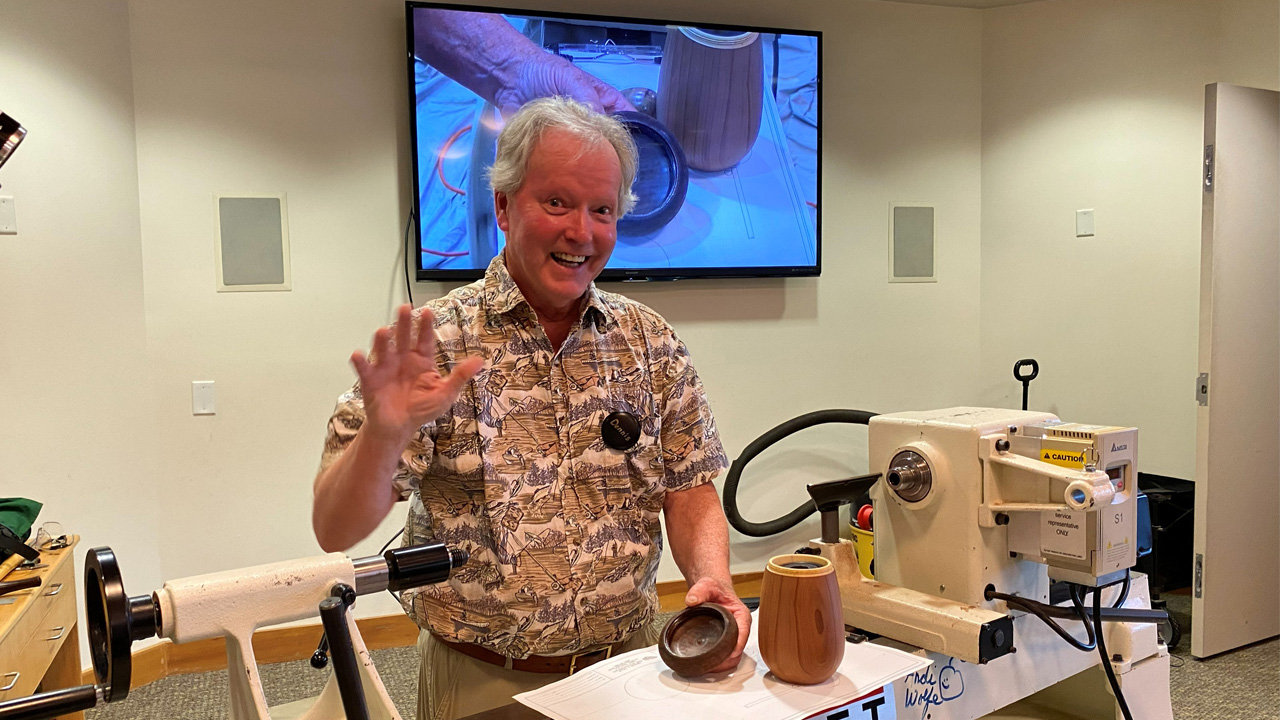
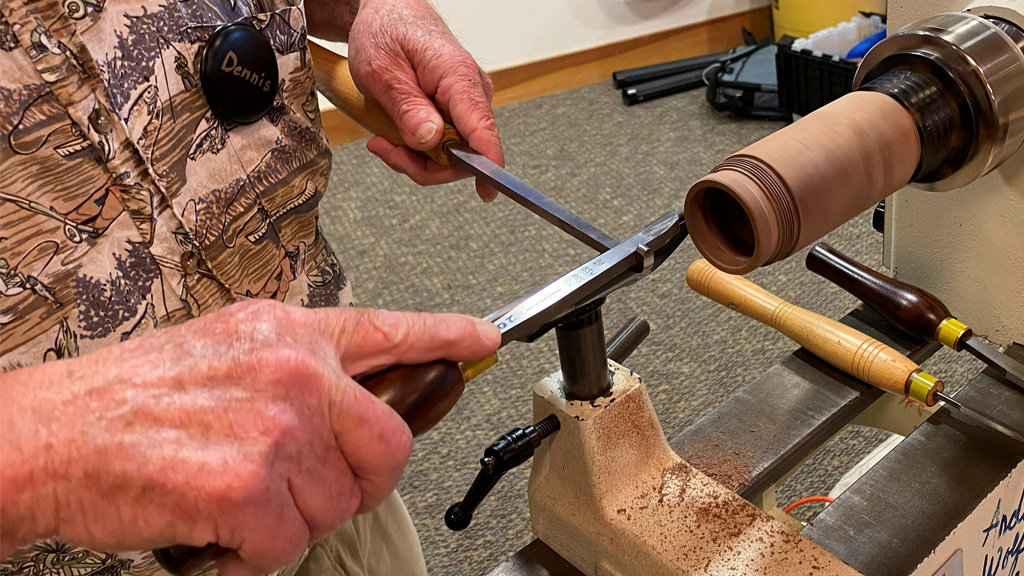
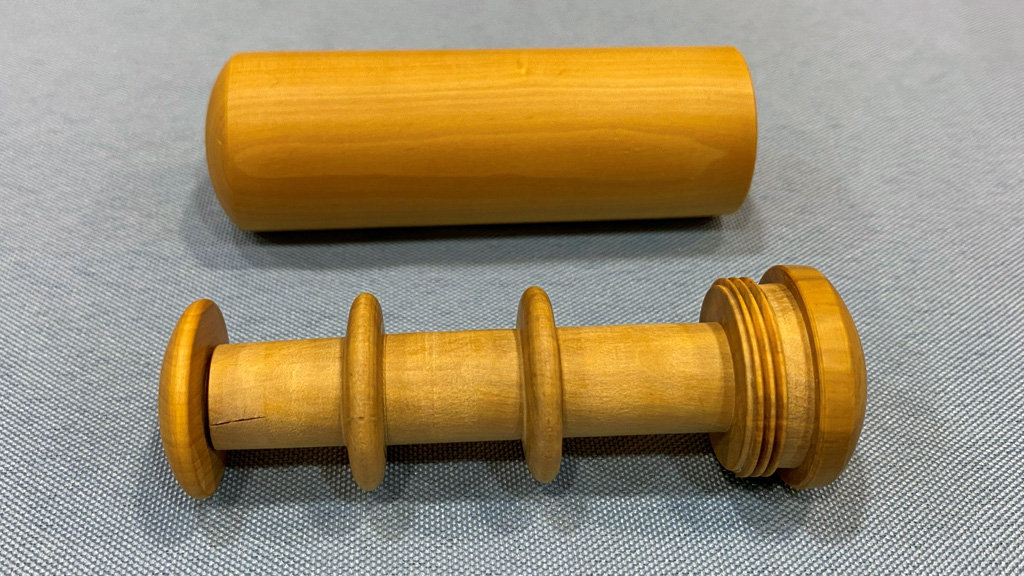
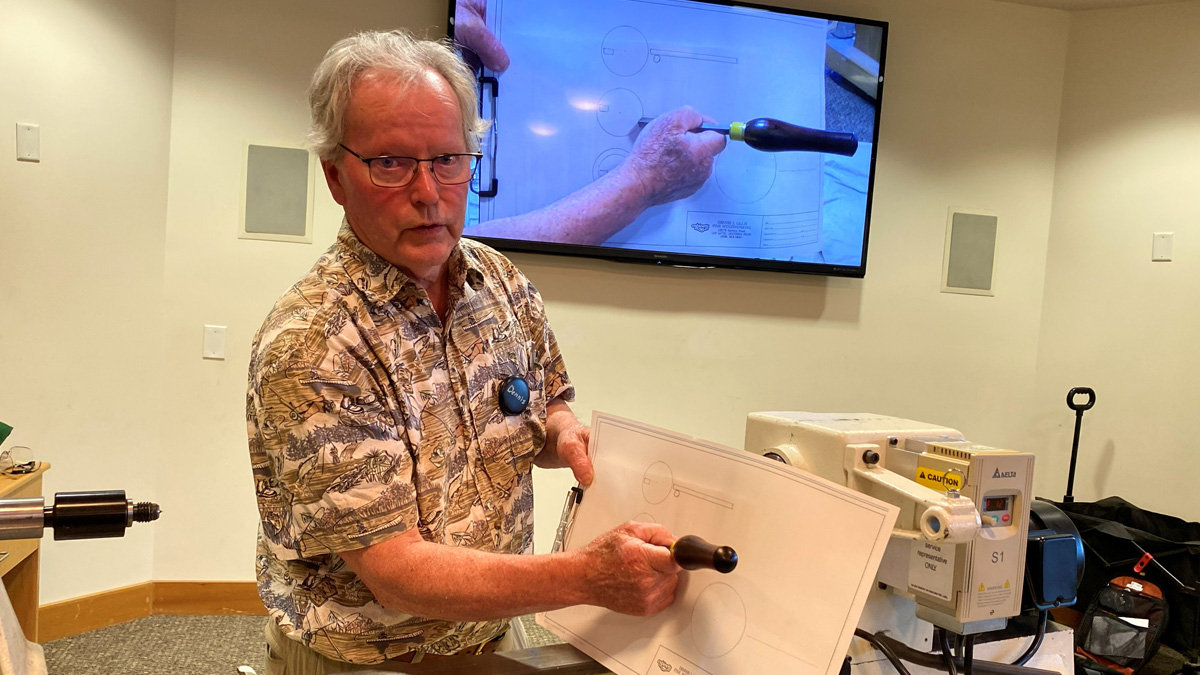
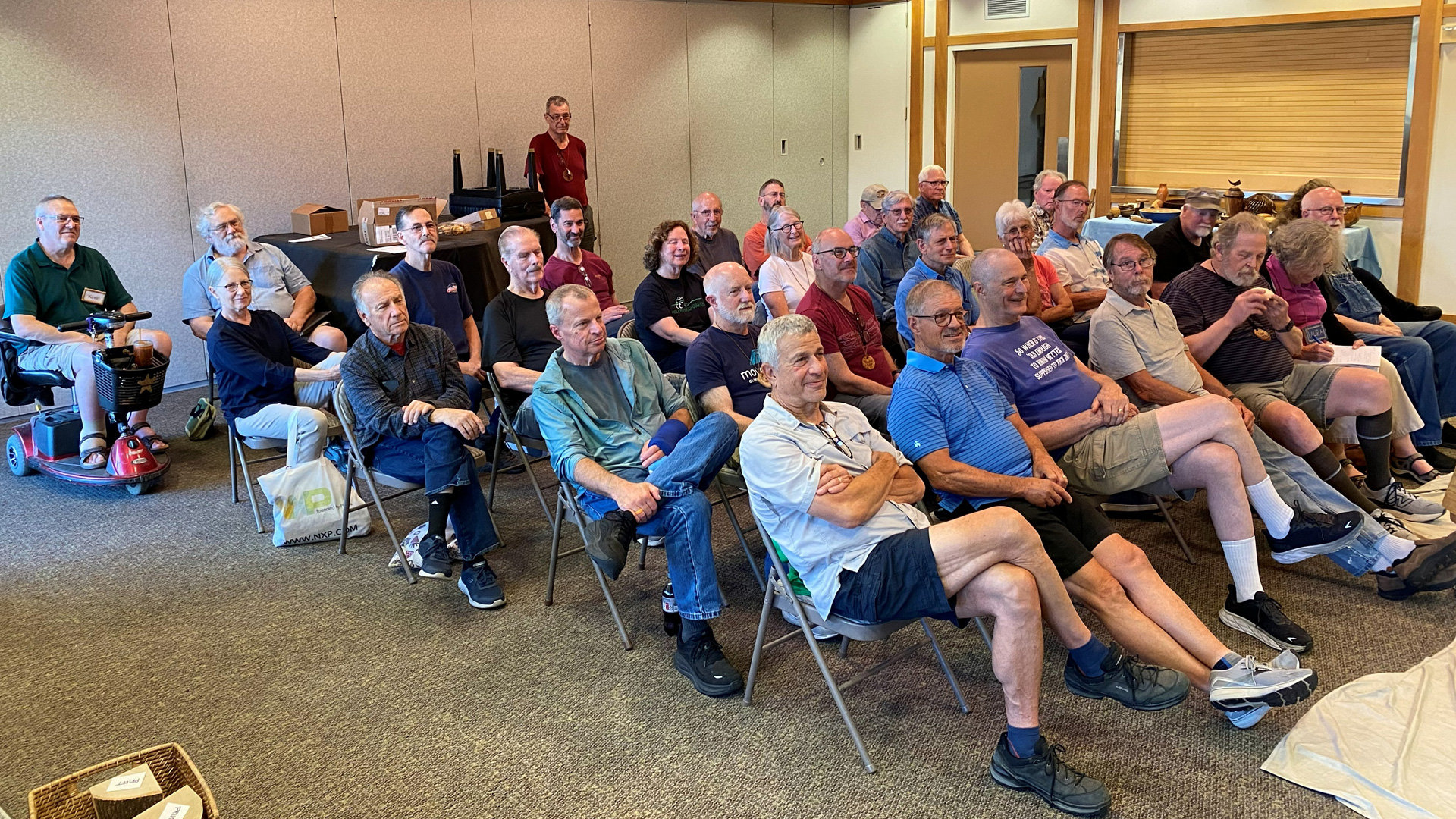
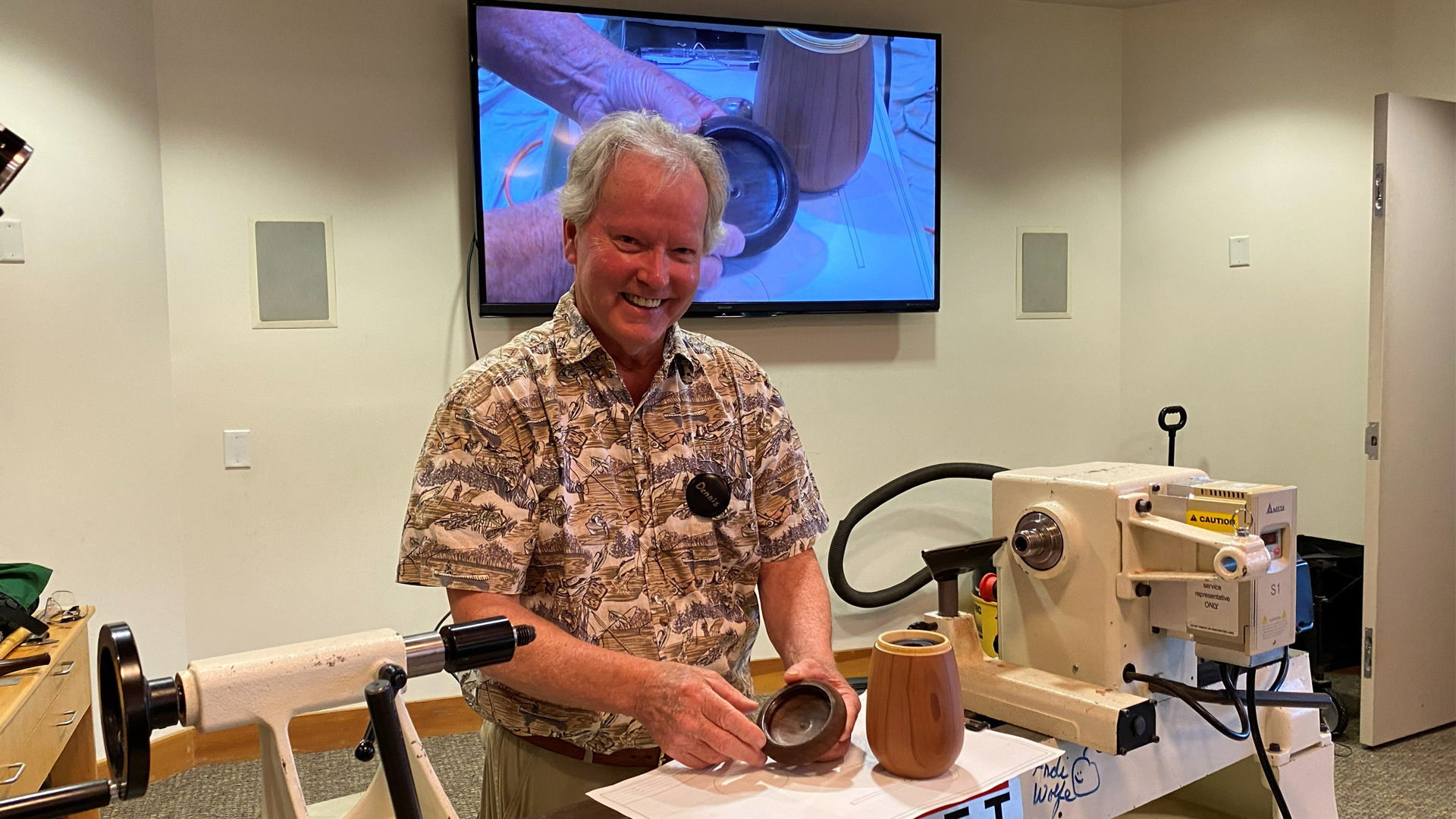
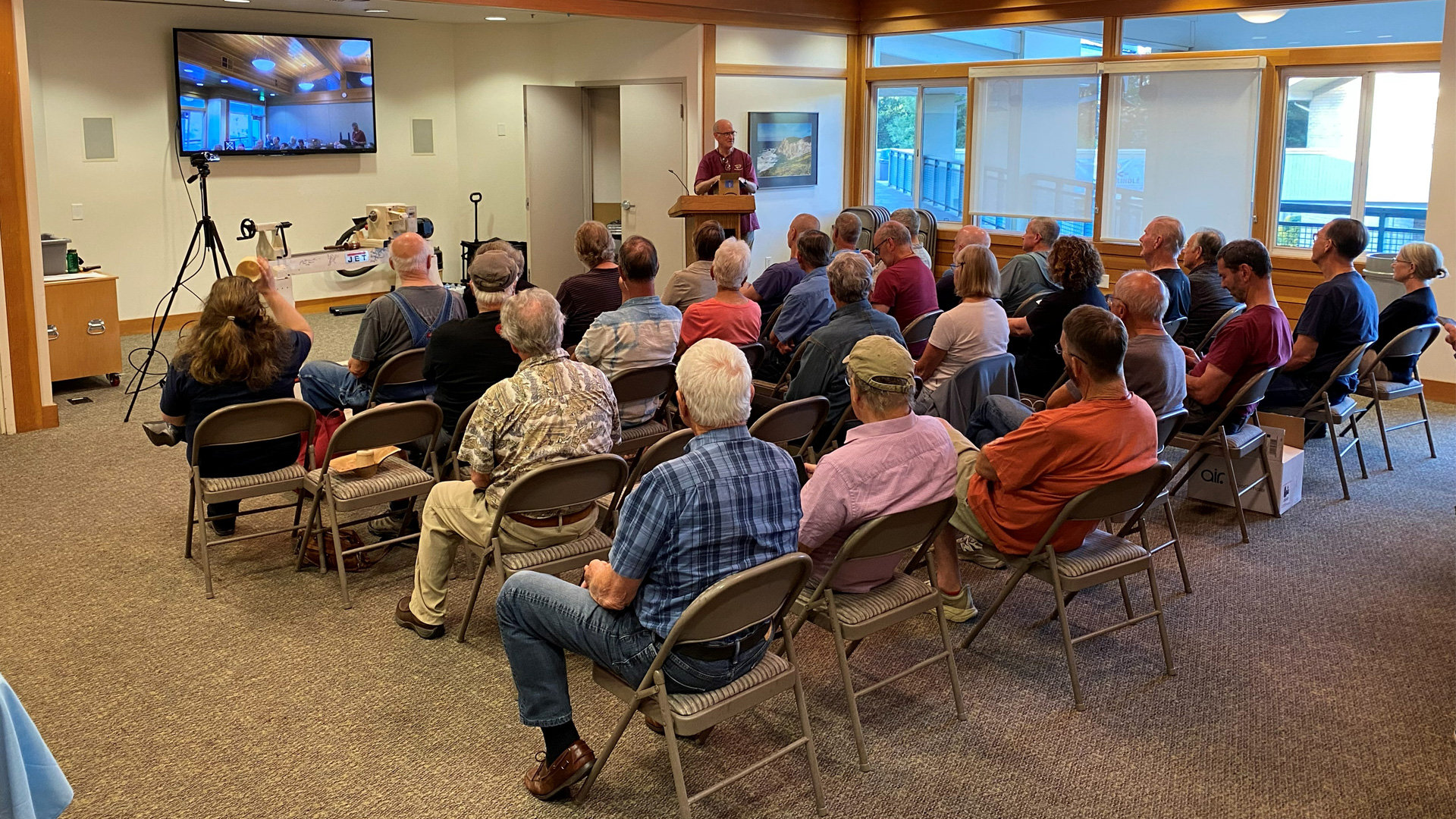
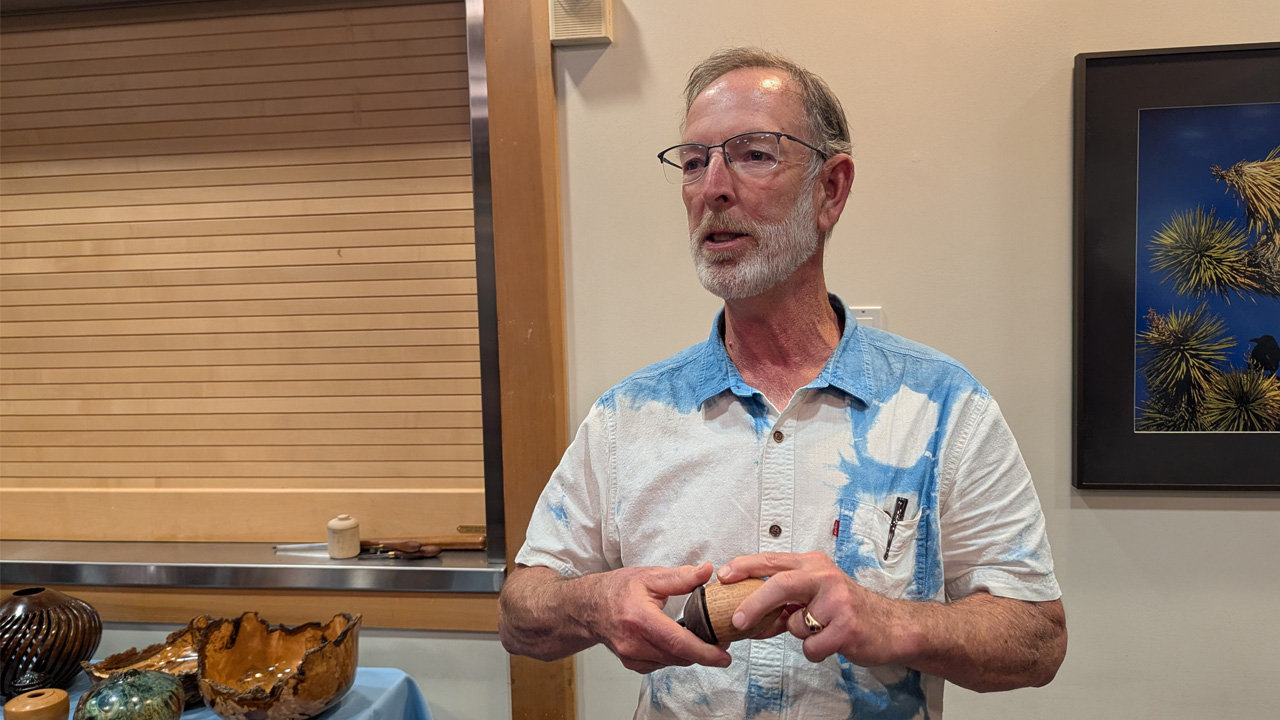
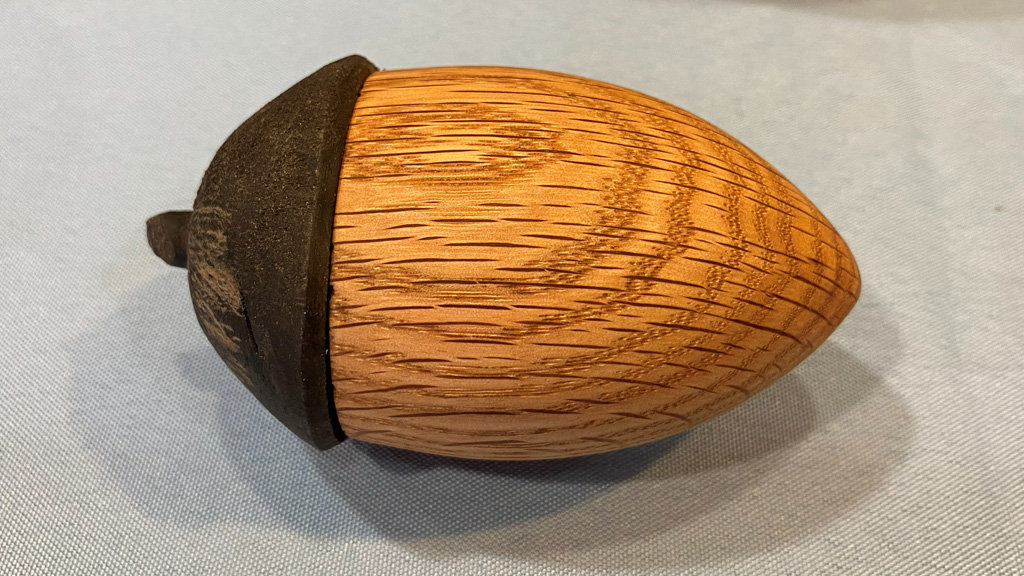
Dennis’s presentation was a recap of a workshop he had given at his house. He noted that the best woods for thread chasing have uniform grain. Some examples include boxwood and blackwood. However, it is possible to use other woods. He showed an egg-shaped box he made from a big leaf Maple burl threaded at 16 teeth per inch (he noted its threads were NOT hand-chased). He also showed a needle and thread box made of boxwood and a bigger acorn box with a walnut lid and Redwood base was Redwood for which he had machine-chased a Bolivian rosewood insert. For soft woods, another strategy is to make threaded inserts out of wood such as Blackwood or boxwood.
Dennis recommends using paraffin wax for lubrication. He also recommends using thin CA glue in thin coats to reinforce the teeth while cutting.
Dennis found he struggled with getting the correct angle of approach with the tool, the correct height for the tool rest and the correct angle for the tool. He showed a few of his hand-chasing tools, including: separate male and female tools for threading at 16 TPI (teeth per inch) and 20 TPI; and a Mahoney/Carter and Sons 16TPI combination tool. 16TP is recommended. To sharpen the thread-chasers he uses a 600 grit diamond card.
To get used to the body movements and rhythm involved in hand-chasing, Dennis suggested using a 3/8 “ 16TPI bolt mounted in a Jacobs chuck in the headstock. Use a pencil to follow the threads.
Threads are typically cut with the lathe running 300-500 TPM. Make sure there are no nicks on the tool rest. Also apply paste wax on the tool rest. One needs to make a stopping groove because you need to pull away before you hit the wall. For the male threads one can make this groove with a parting tool. Dennis has a few different tools for cutting the relief groove for the inside of the female threads, including a handmade ground down scraper and a hollowing tool. He noted that the thread depth is typically .040 “.
Dennis demonstrated on walnut (not a recommended wood for thread-chasing). The hardest part is starting. It’s important to use a gentle touch establish the first threads and he indicated that walnut tends to crumble.
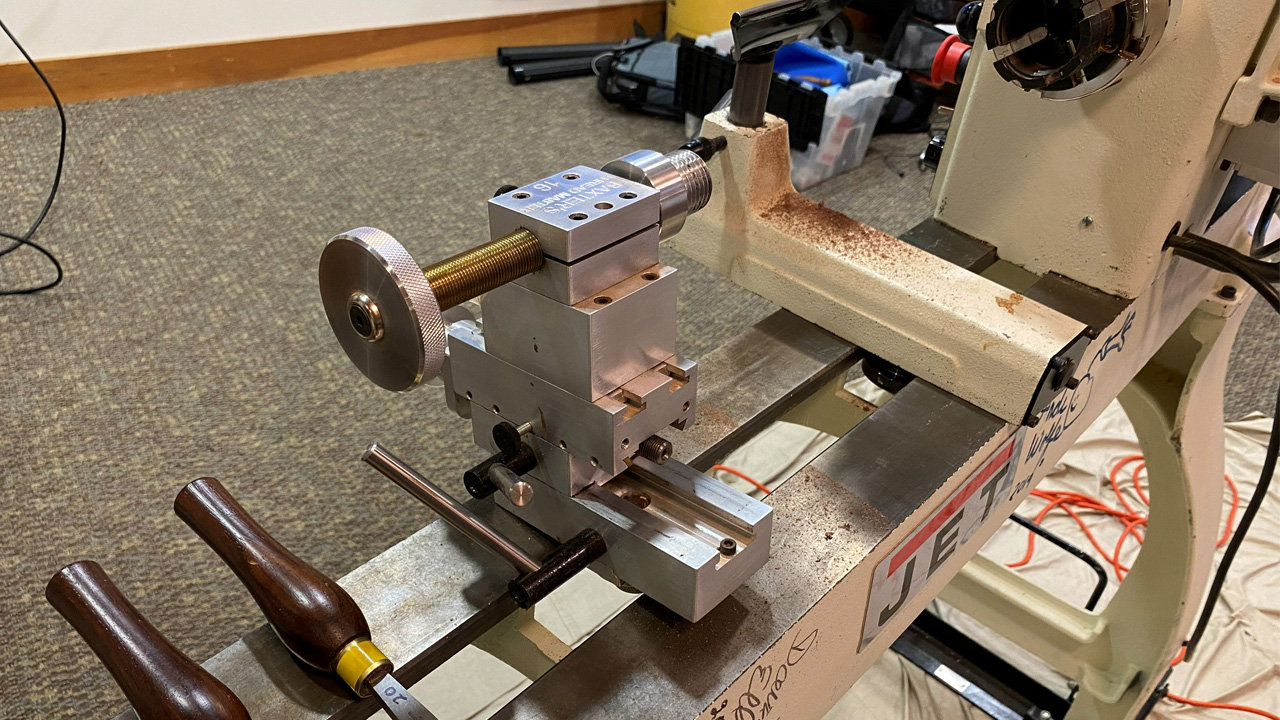
Finally, Dennis brought out his “secret” to successful thread chasing. He has a Baxter threading jig which fits his mini lathe. He transfers the piece in its Chuck to the non-rotating threading jig. The cutter spins at high speed in the lathe’s headstock. Thread cutting is done in multiple passes with fine increments provided by the jig.
President’s Challenge – Turn a Slip Fit Box
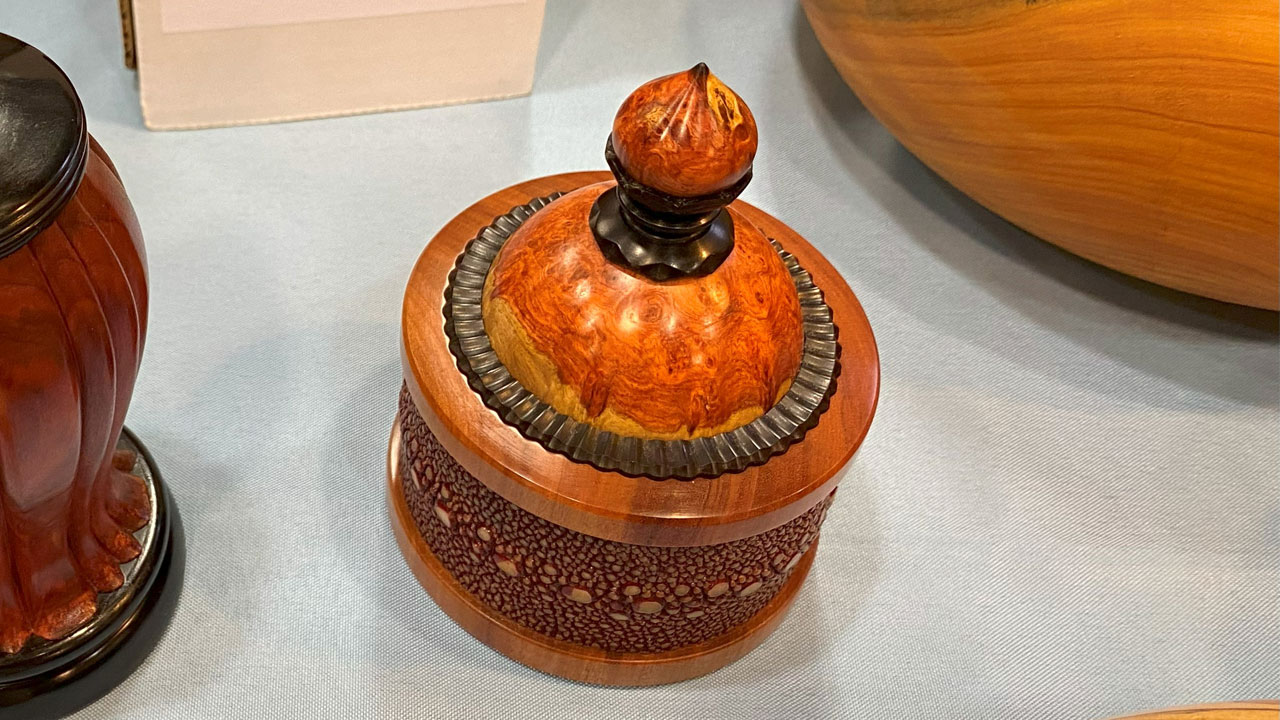
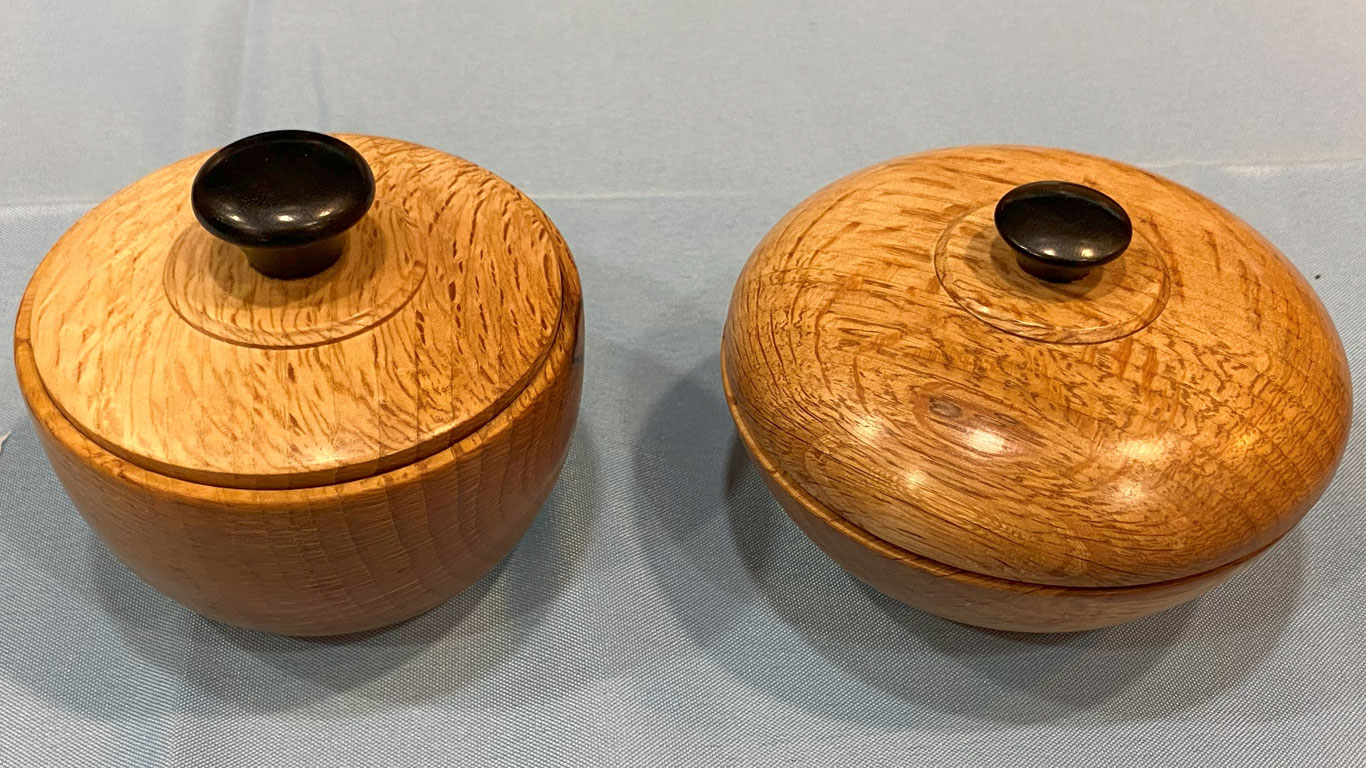

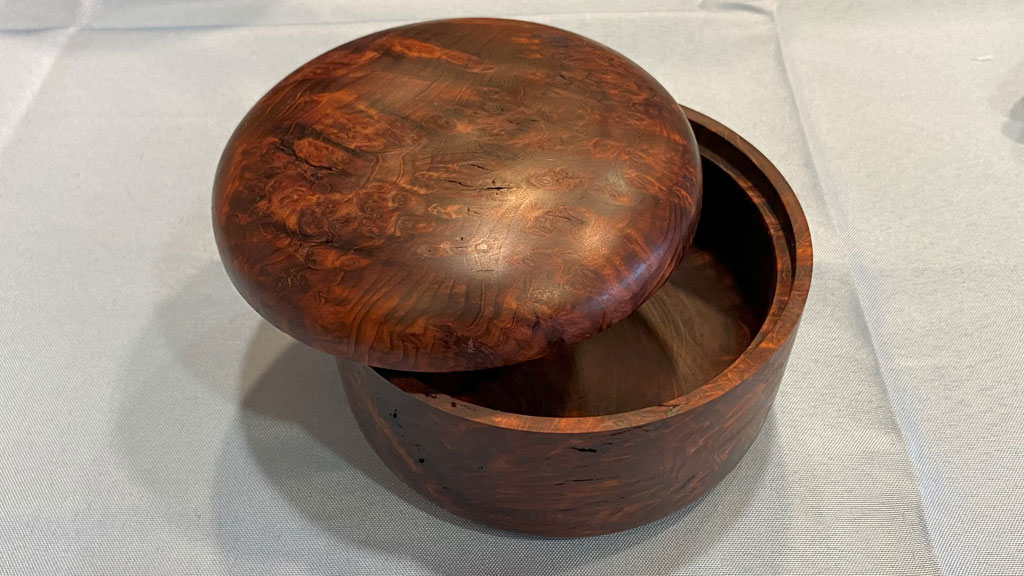
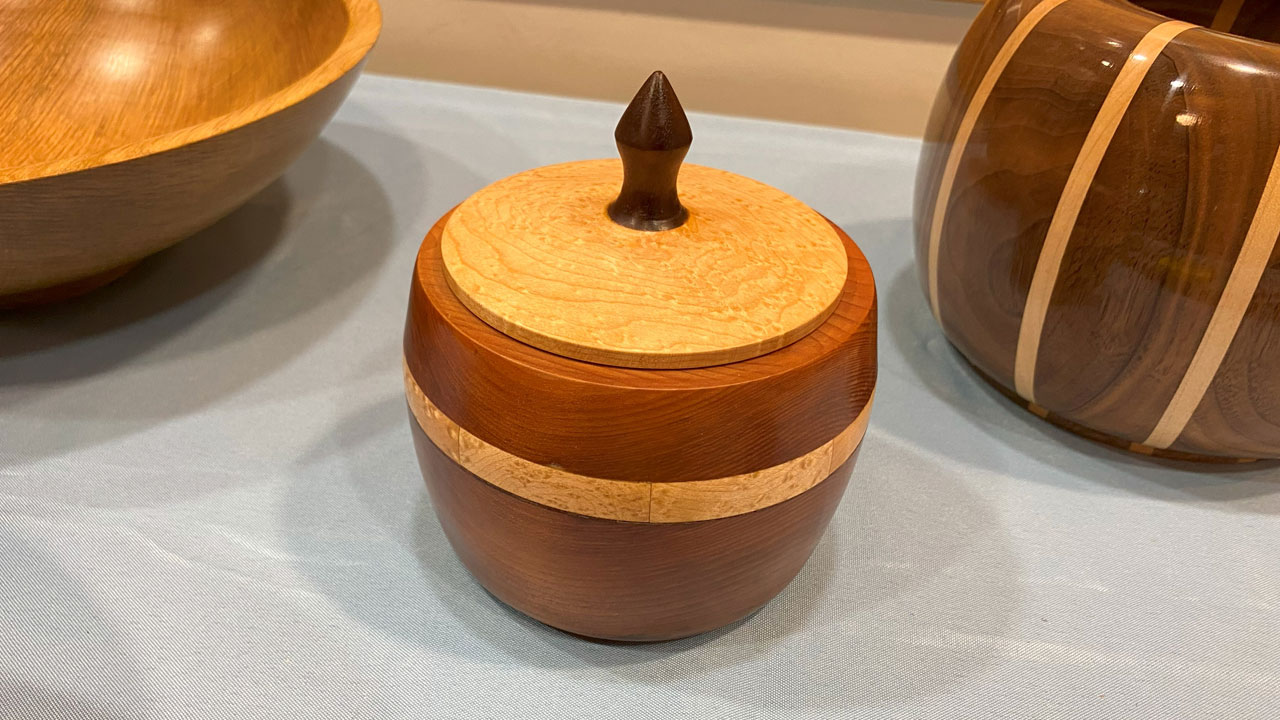
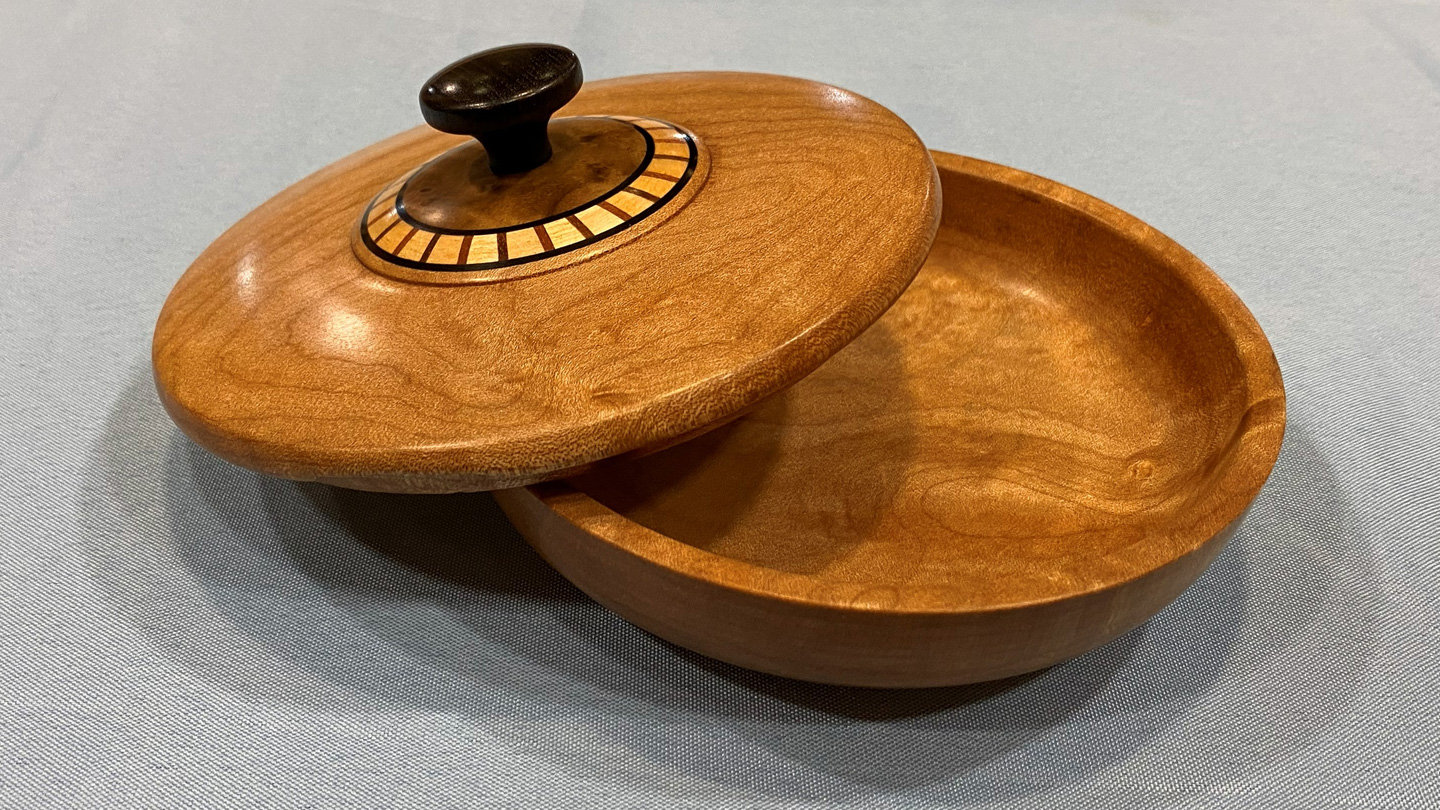
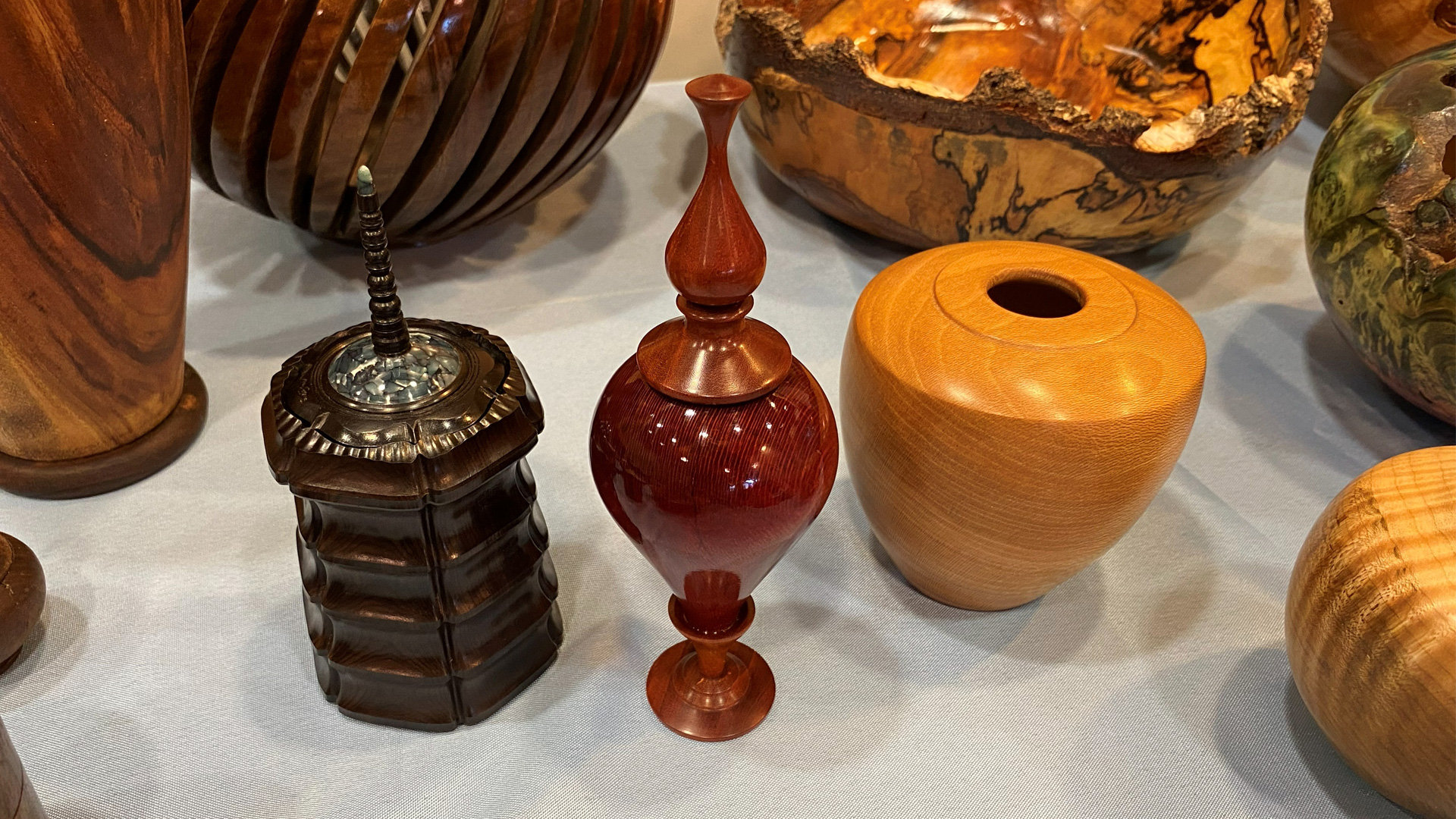
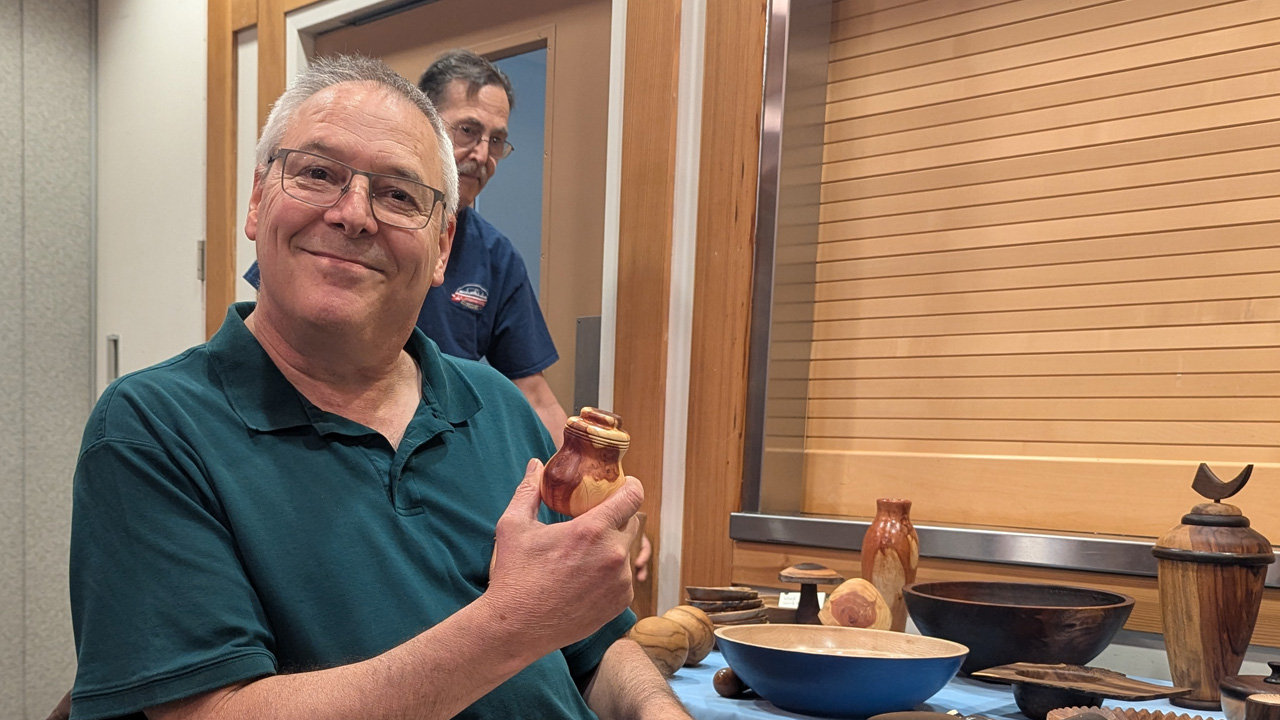
Kevin Lee made a juniper box for his niece.
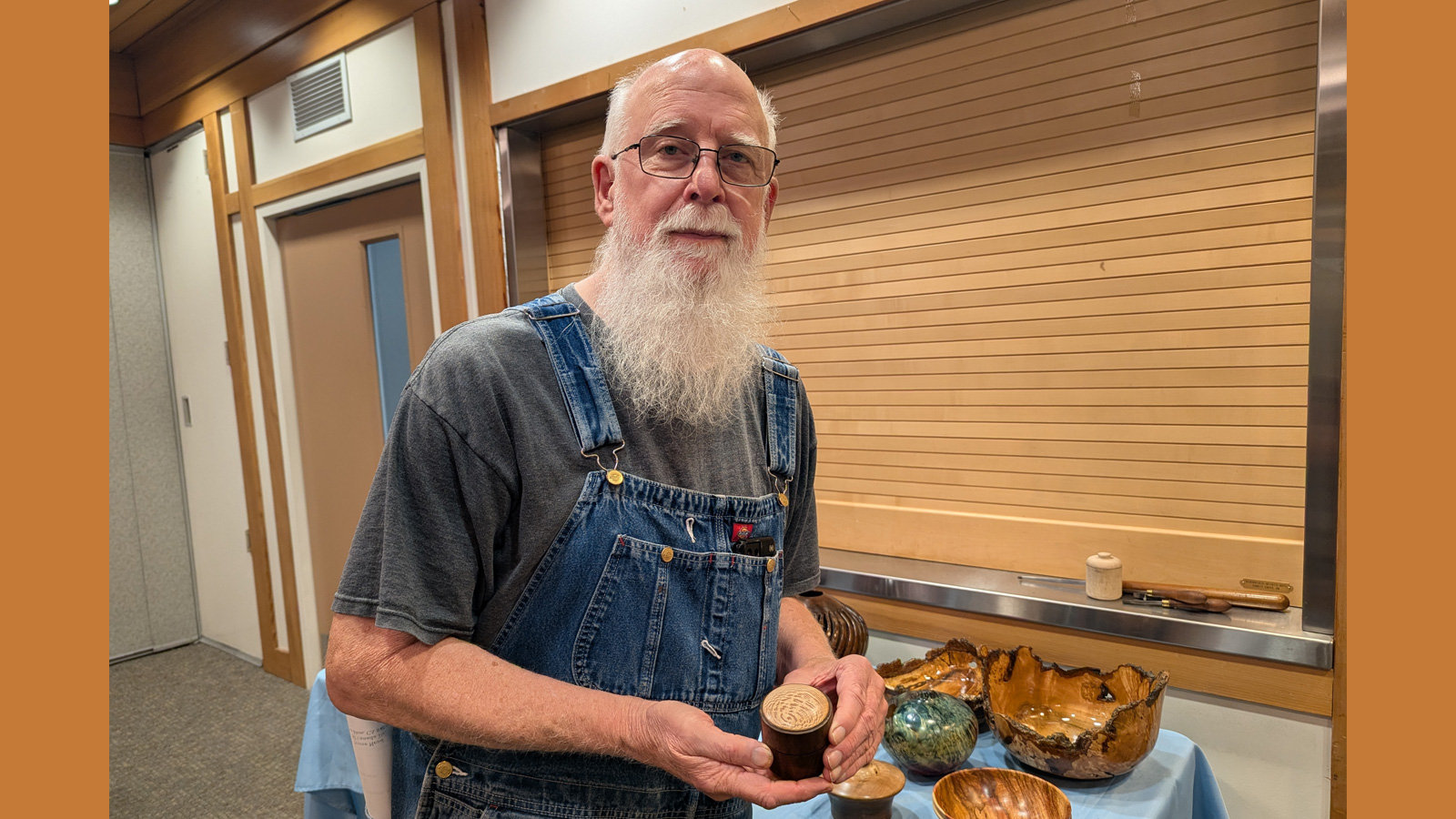
Harvey Klein made a black walnut box with an inlaid Sycamore lid.
Dean Caudle made a black walnut threaded box.
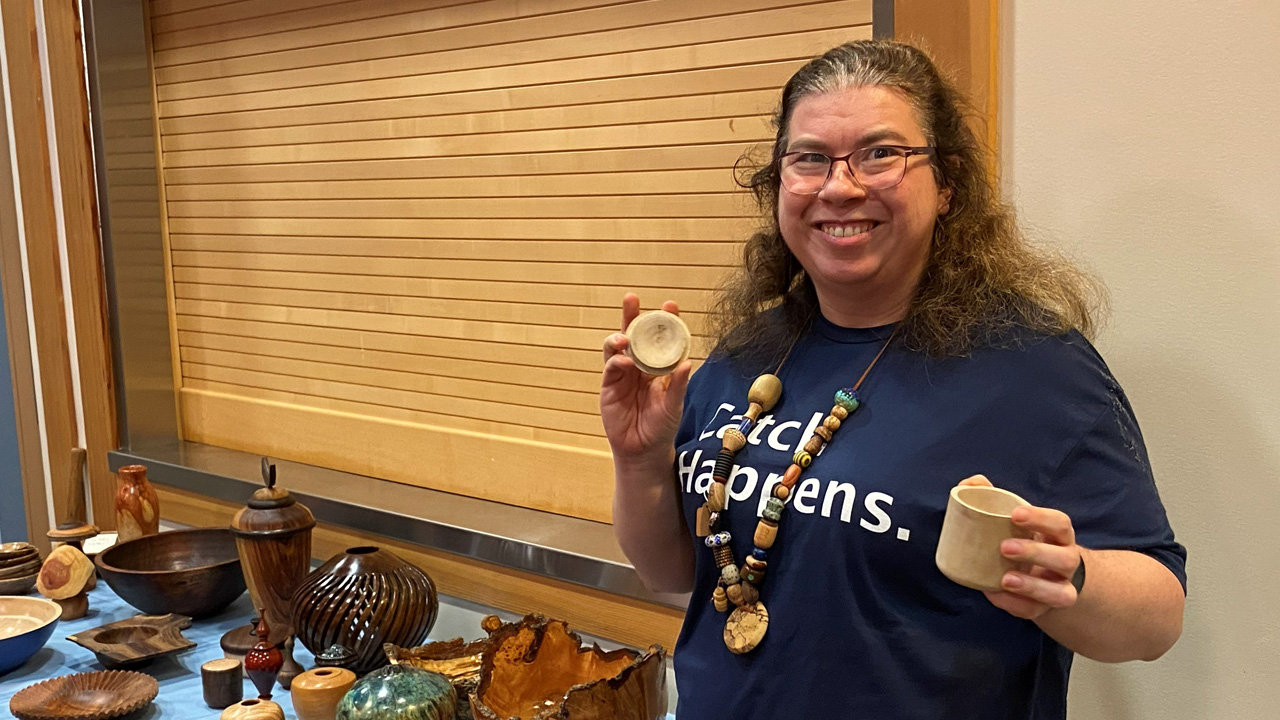
Angela Gunn had a box that she turned green. She plans on embellishing it using techniques she learned in an AAW symposium class.
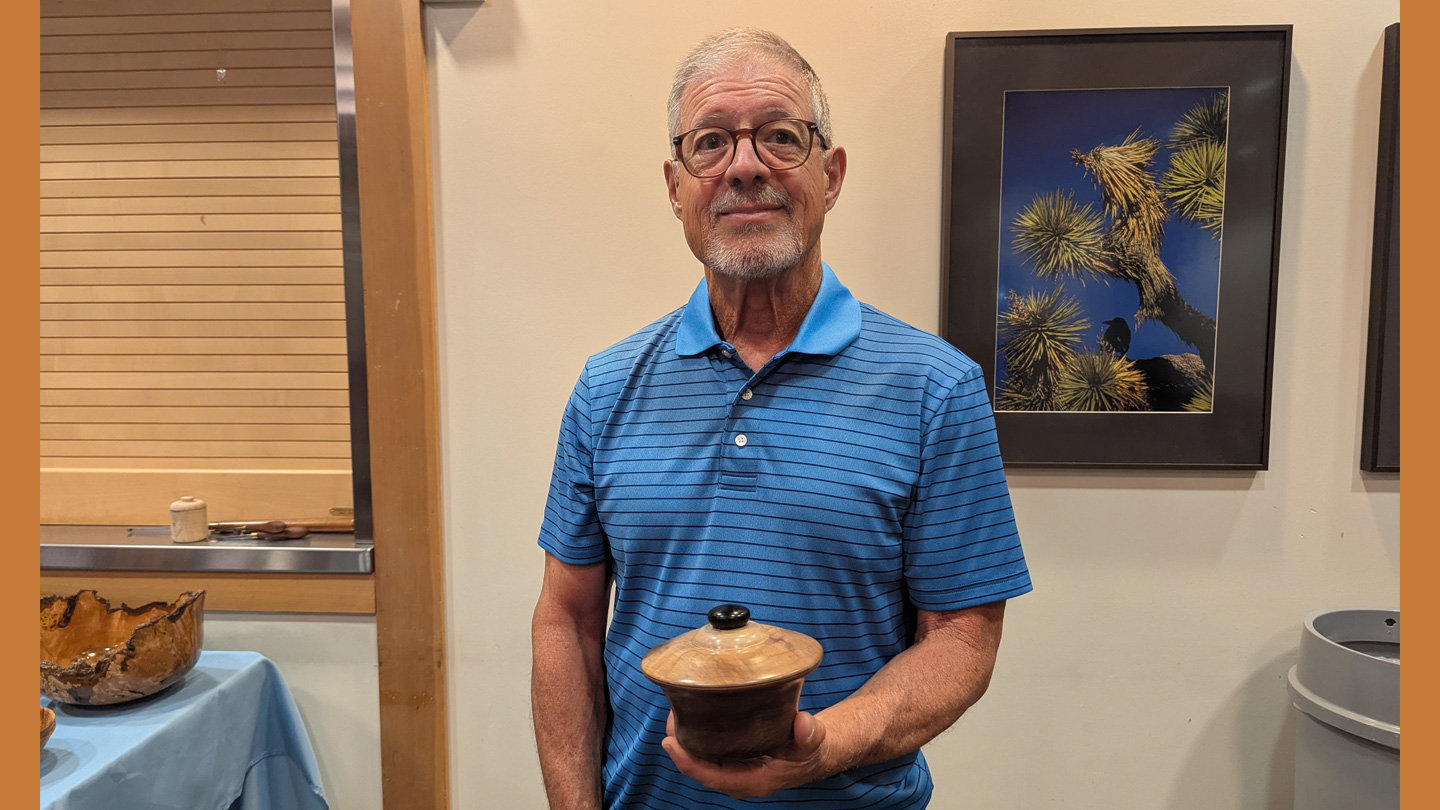
Jerry Galli made lidded box starting out with an 8 by 8 square of walnut. The lid was Bay Laurel with a blackwood inserted knob. It was finished with lacquer and beeswax.
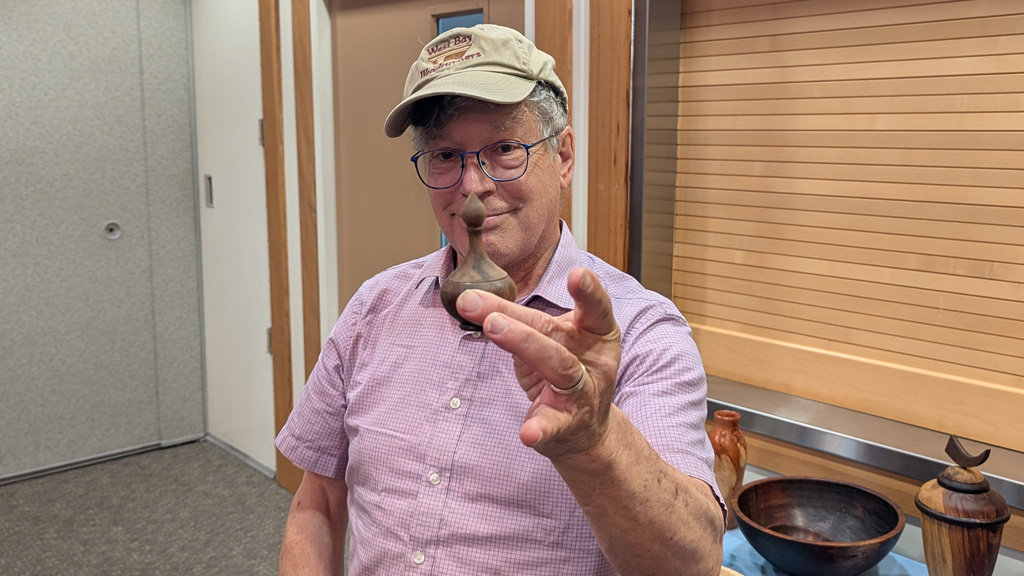
Fred Colman made a little box.
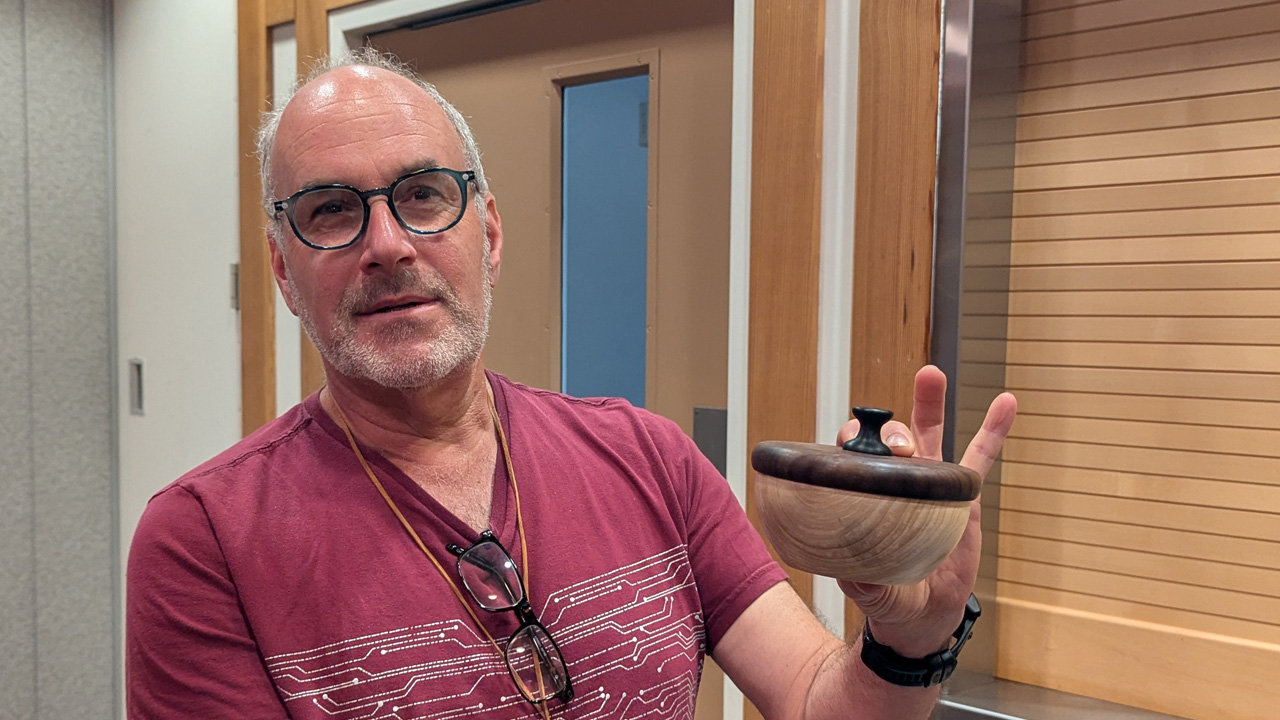
Daniel Saal made a lidded bowl from Maple, walnut and blackwood.
Show & Tell
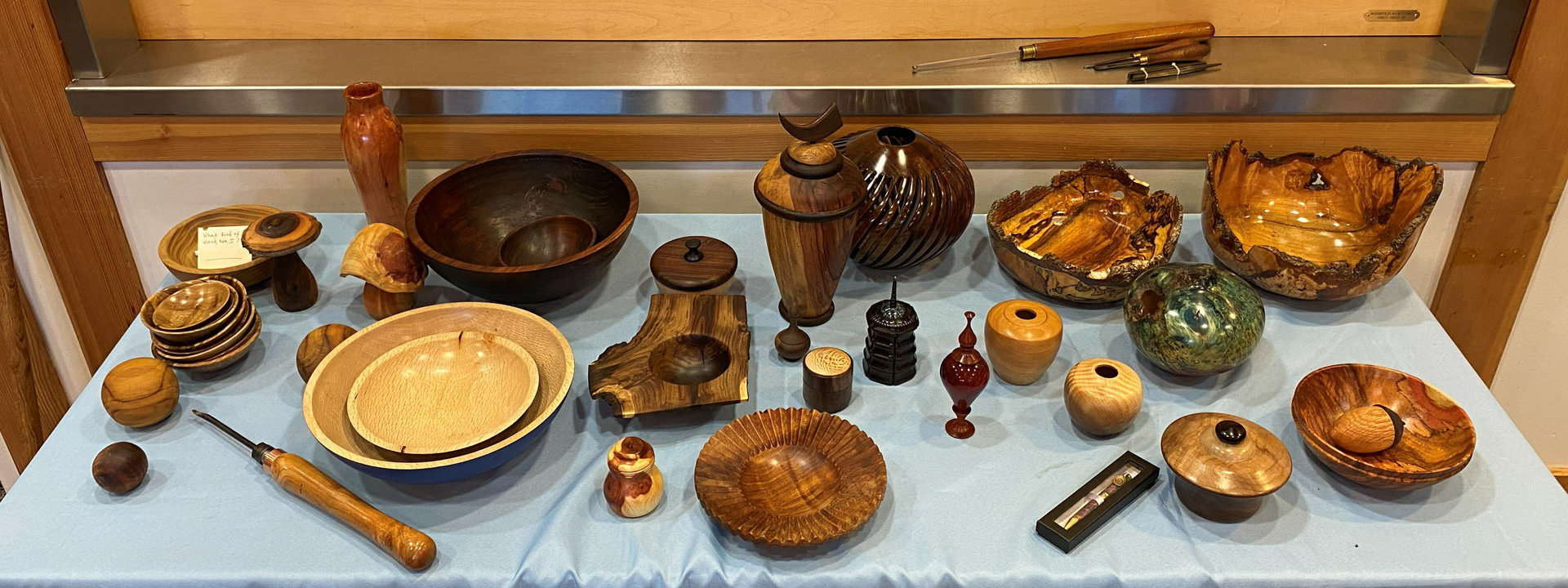
Edgar Whipple showed a nearly white juvenile English walnut bowl, an end-grain bowl from juvenile walnut and a silver oak bowl with a natural defect that led him to name it “witch on a broomstick emerging from her cave”.
After watching Mark Koenig’s demo, Bob Bley practiced using TransTint dyes on a piece turned from Buckeye burl. He first dyed it black, sanded it back, then colored with various colors. The final finish was MinWax wipe-on poly, then buffed with the Beall system.
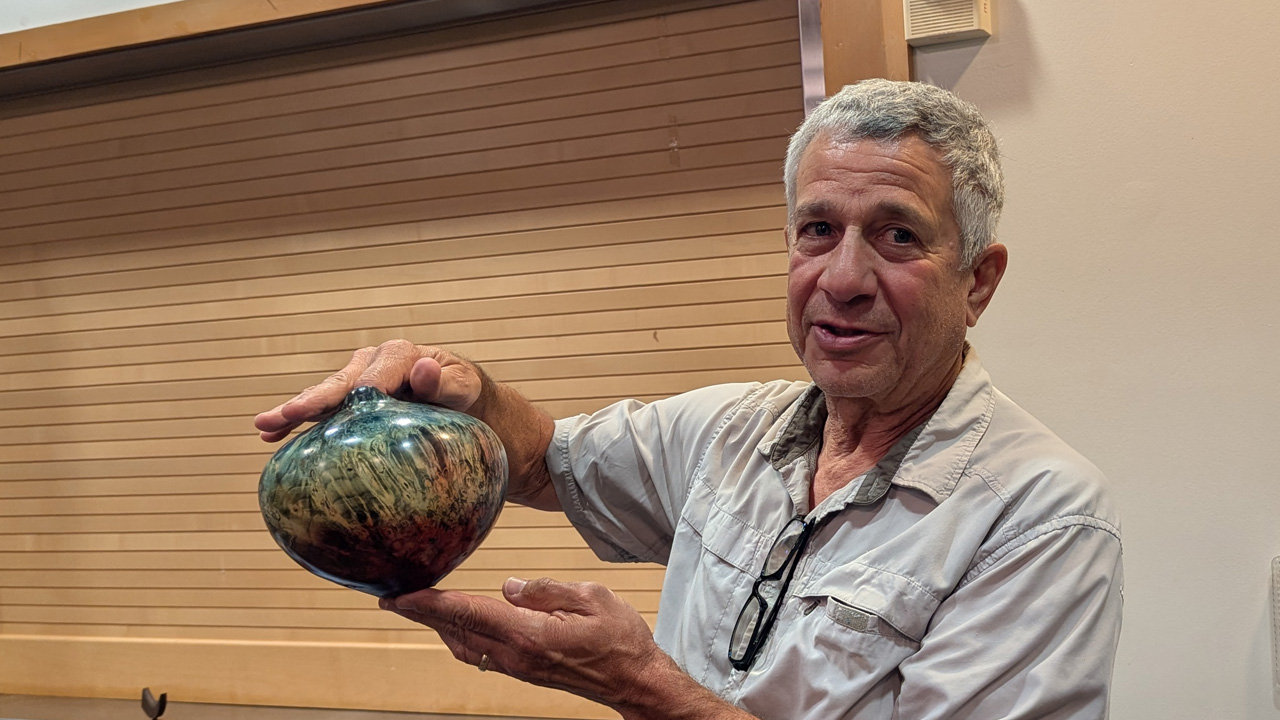
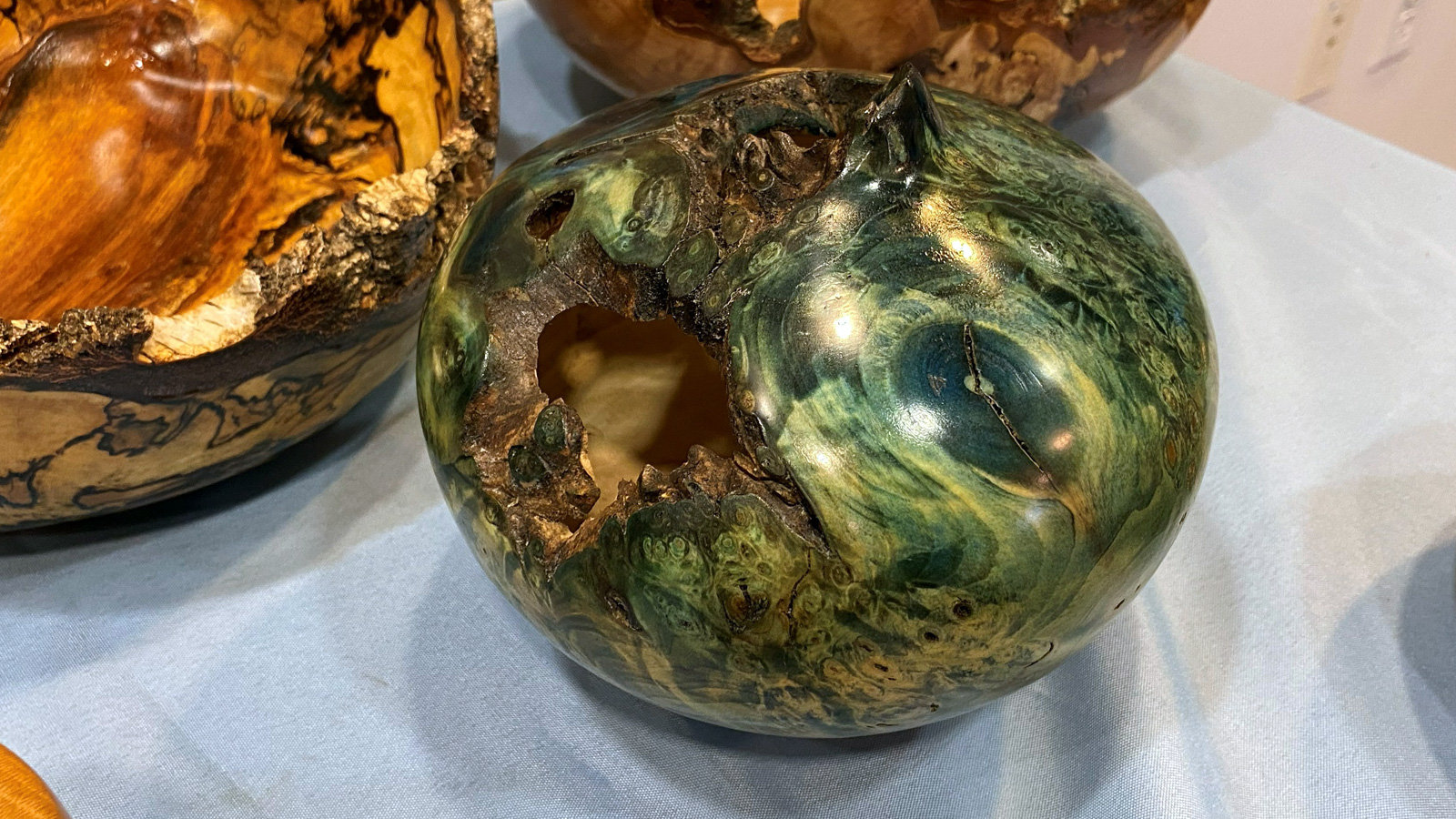
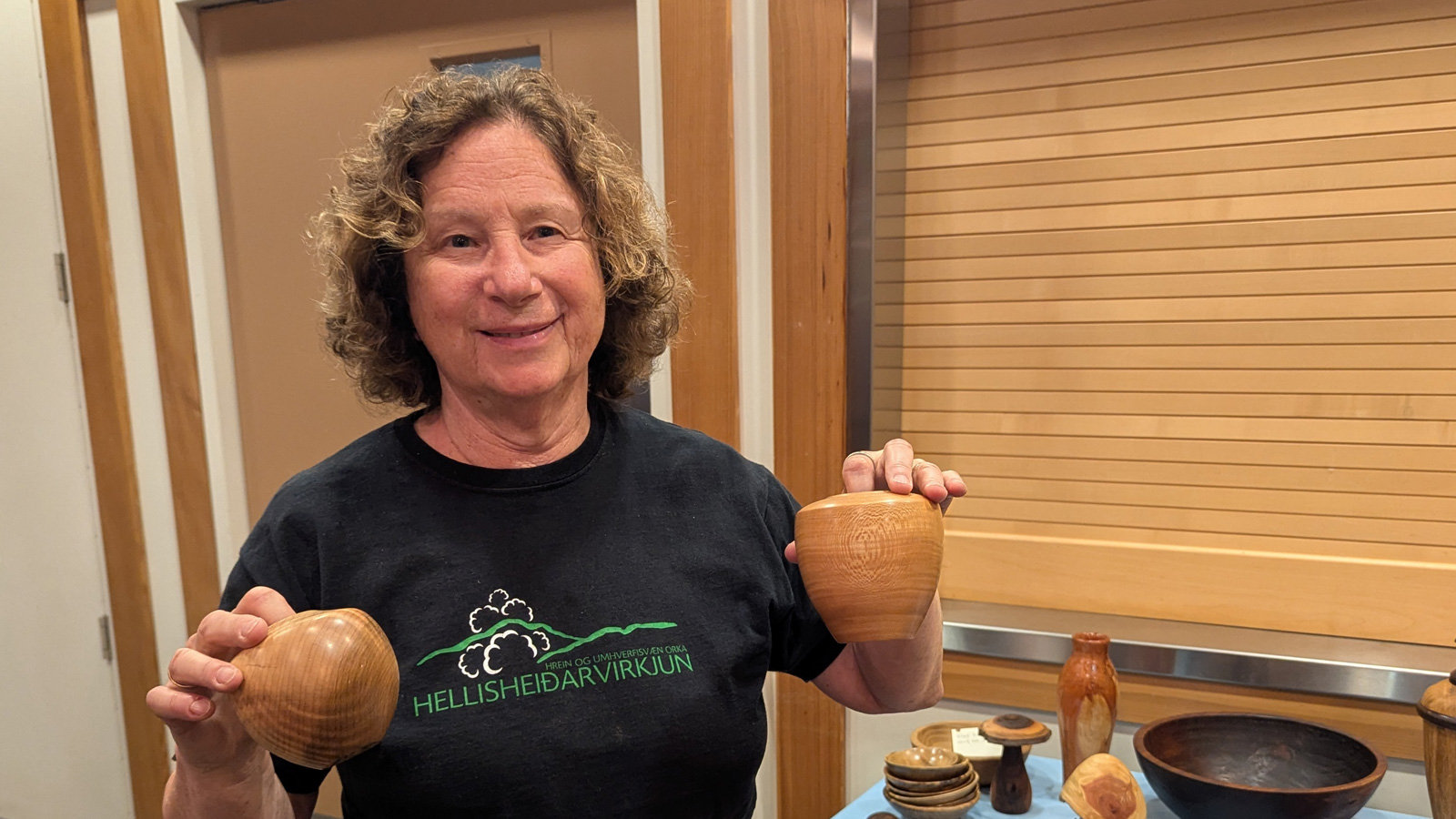
Carole Gilbert made one hollow form of dry wood and another twice-turned. She buffed them with Tripoli wax.
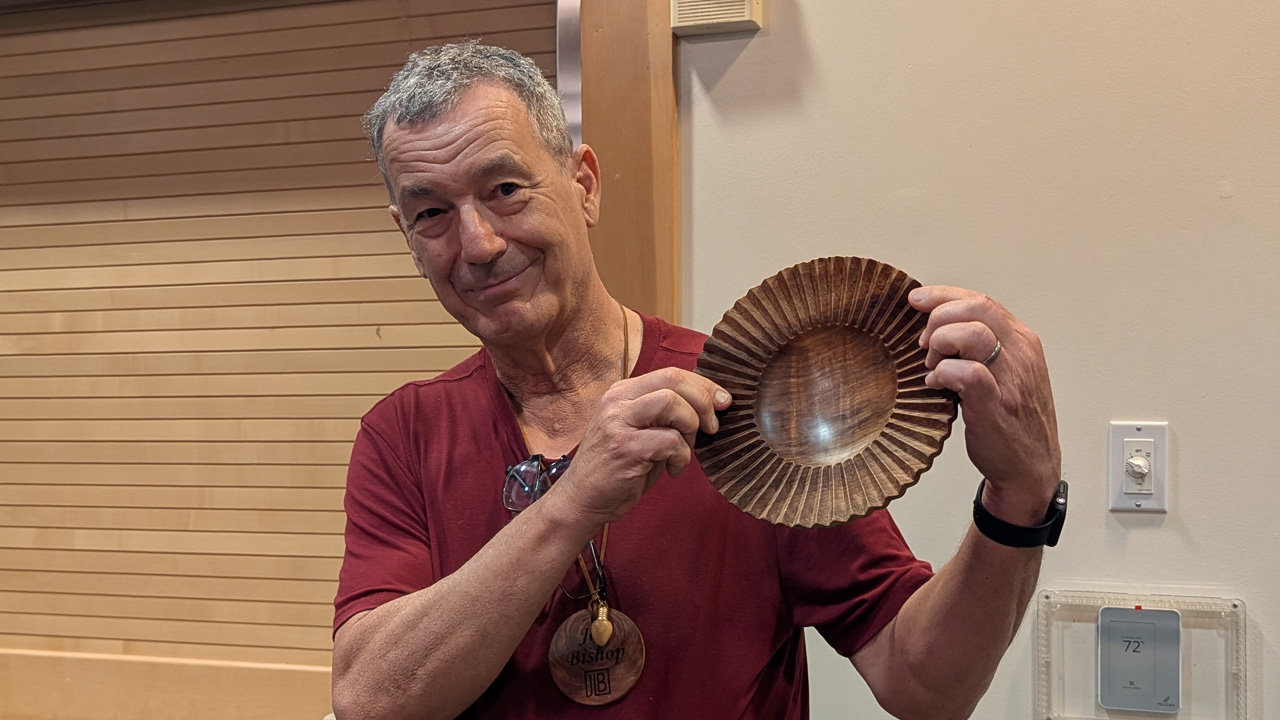
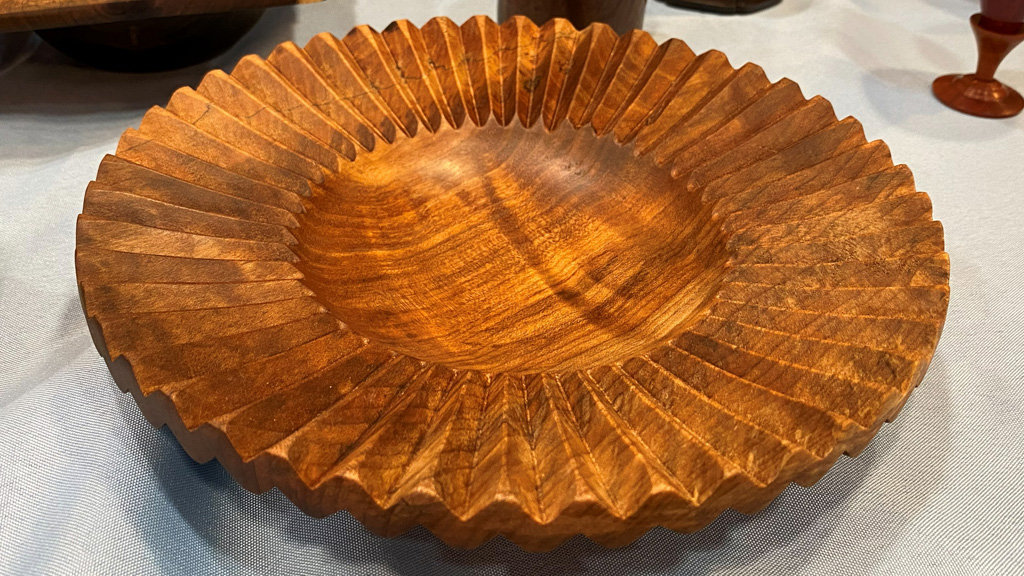
Jon Bishop showed a router dish with grooves on both the top and bottom.
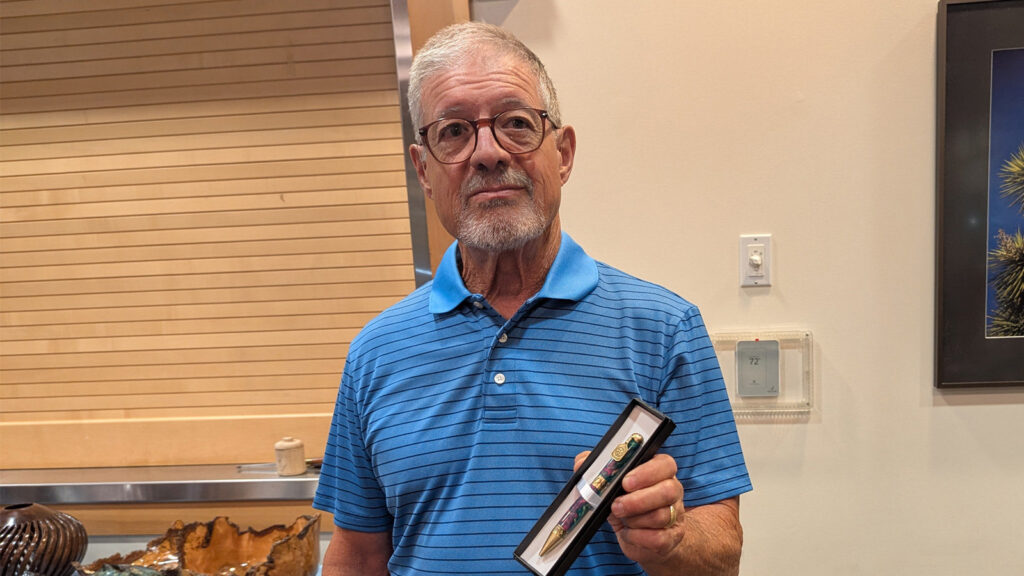
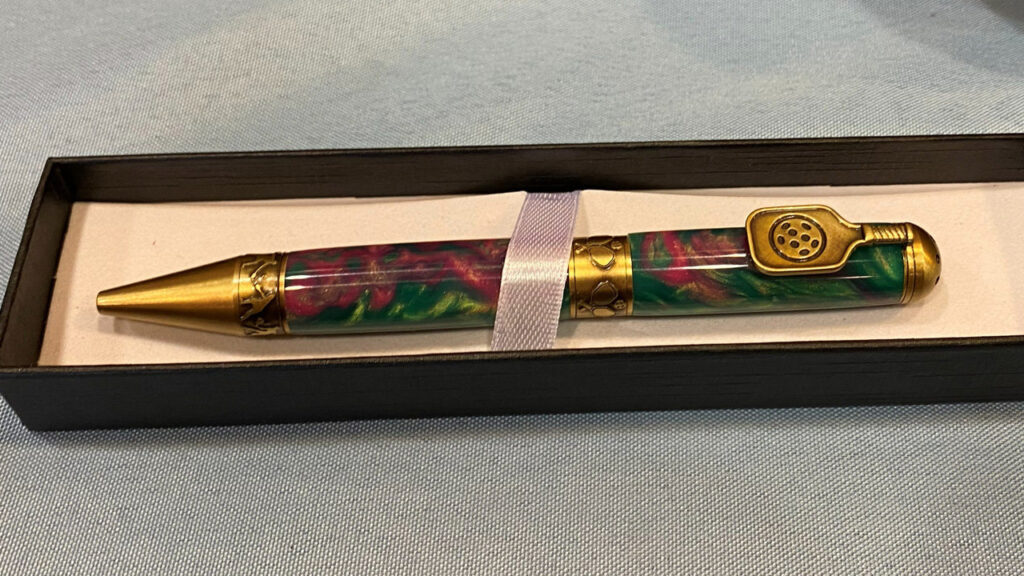
Jerry Galli showed a pickleball pen (kit available from Penn State Industries). He made it from a pomegranate martini acrylic blank.
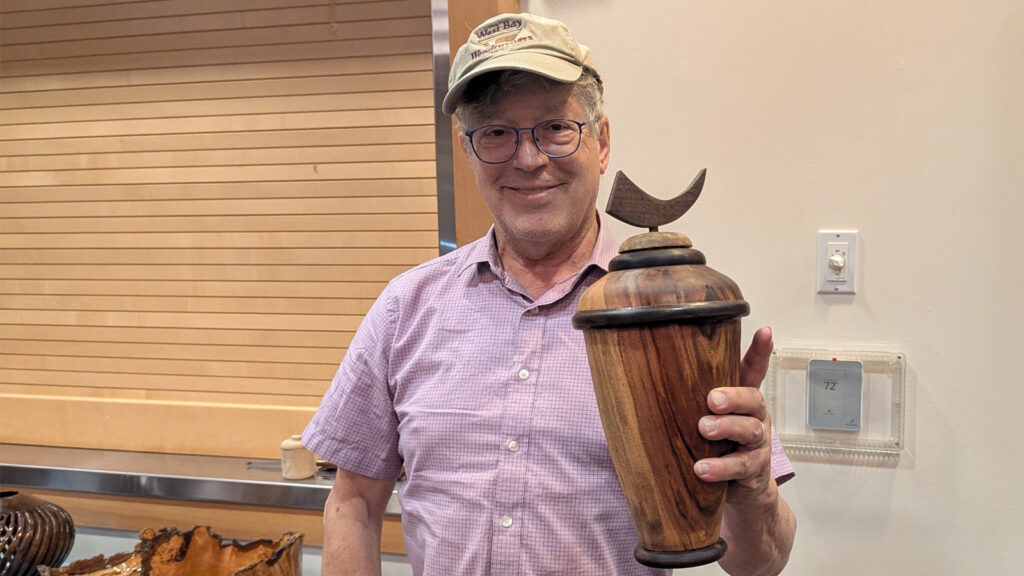
Fred Colman made a vase of camphor. He went through the side, so he made a ring and filled the gaps with wood slurry. He threaded a wing top with a metal thread and put a crystal surprise on the inside of the lid.
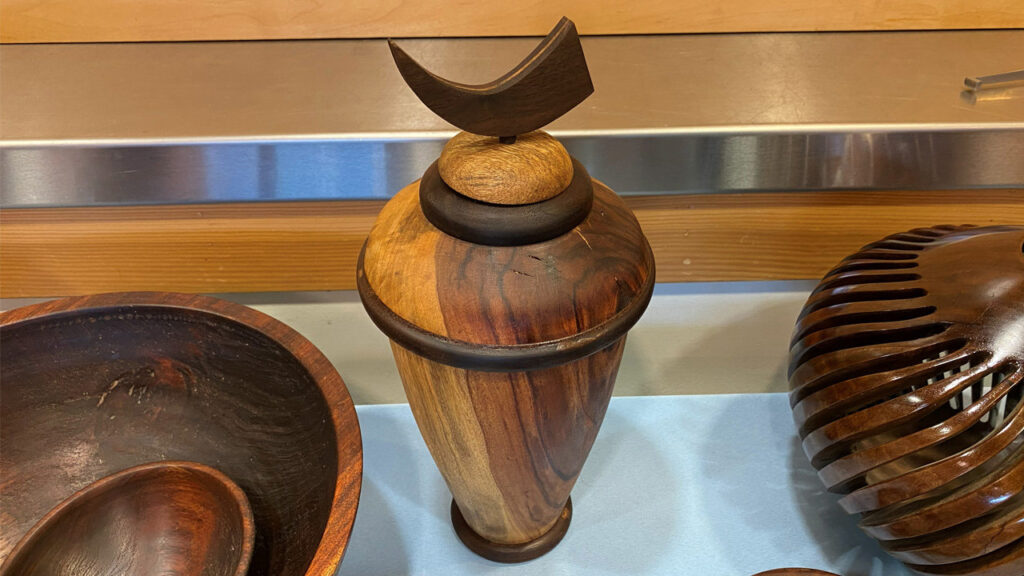
Kelly Smith had cored a large walnut piece with Dan Boehmke’s help. He ended up with two bowls finished with oil and beeswax. Kelly also made a juniper mushroom, a juniper vase, many small bowls from Chinese pistache, an apple mushroom, an offset-turned croquet handle and several balls, including two of Maple and two of teak and one small one of acacia.
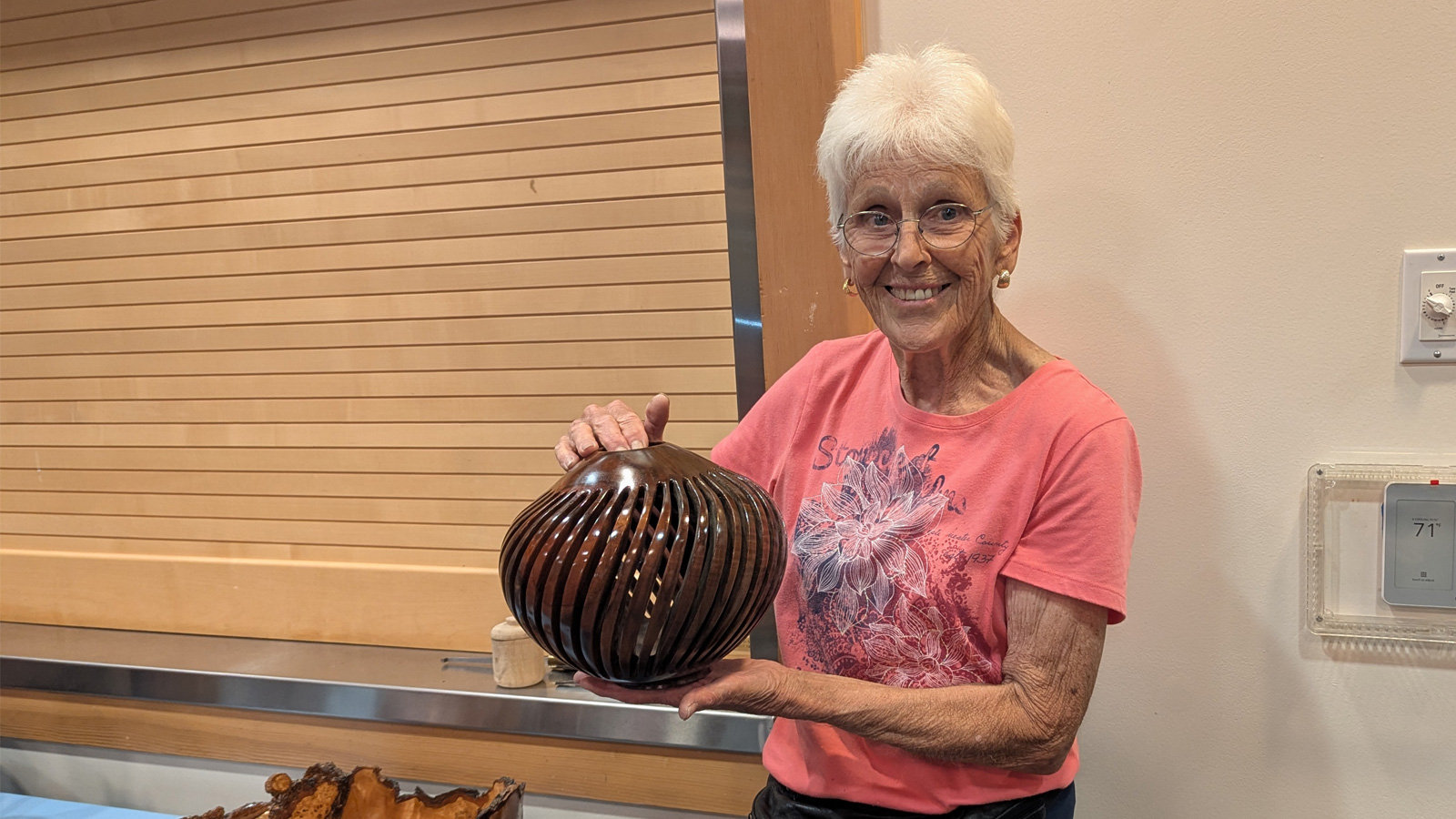
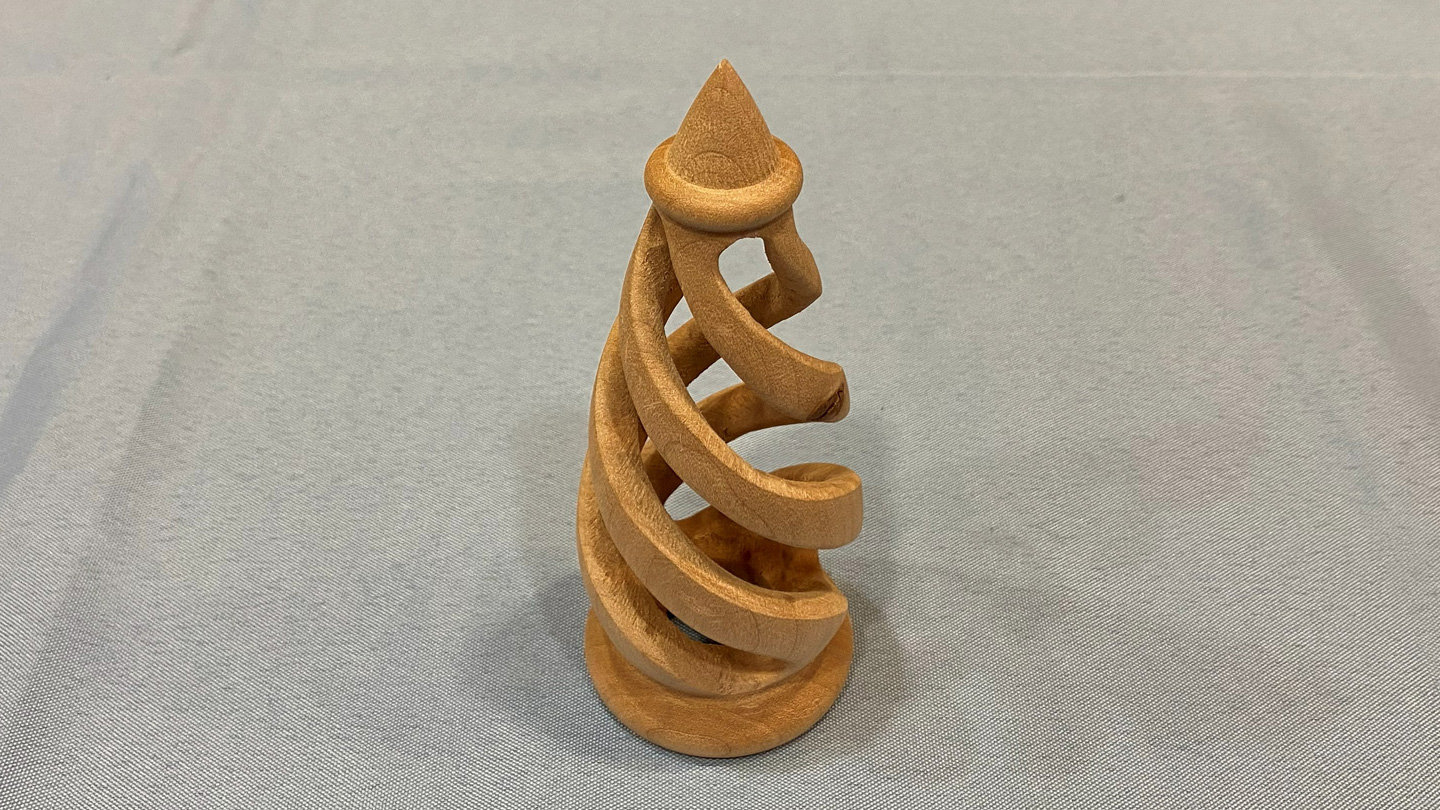
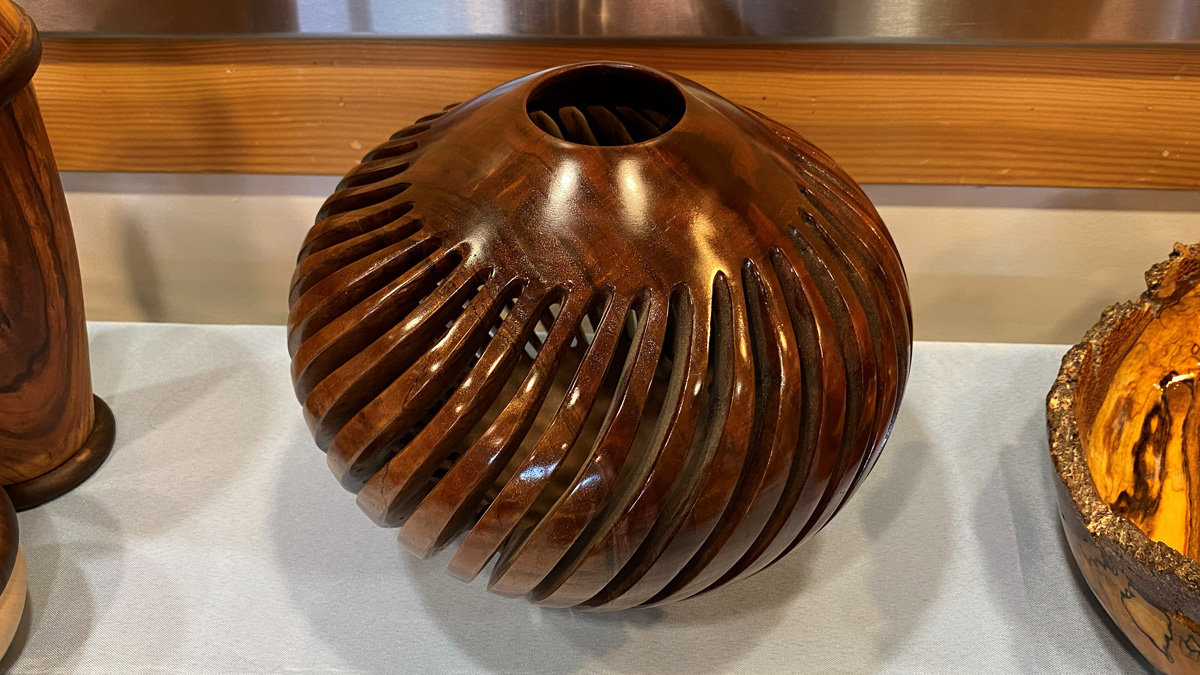
Dottie Bang made a walnut spiral vase. The spirals were hand cut and required a lot of sanding. She also showed two large natural edge bowls.
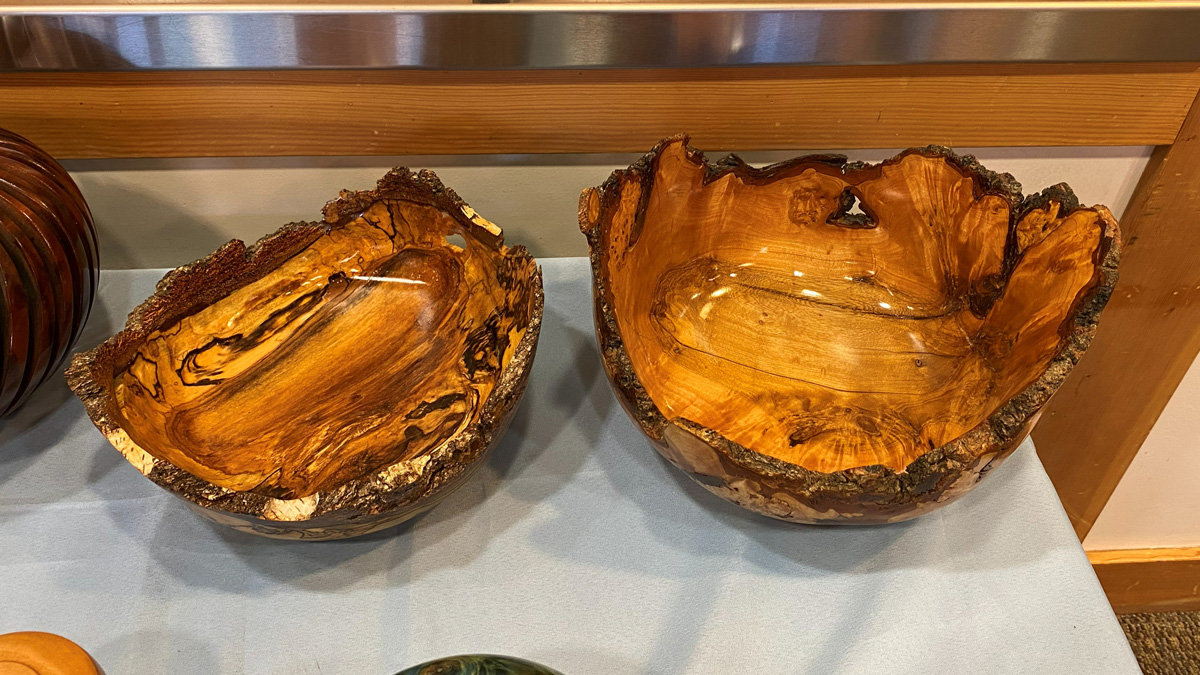
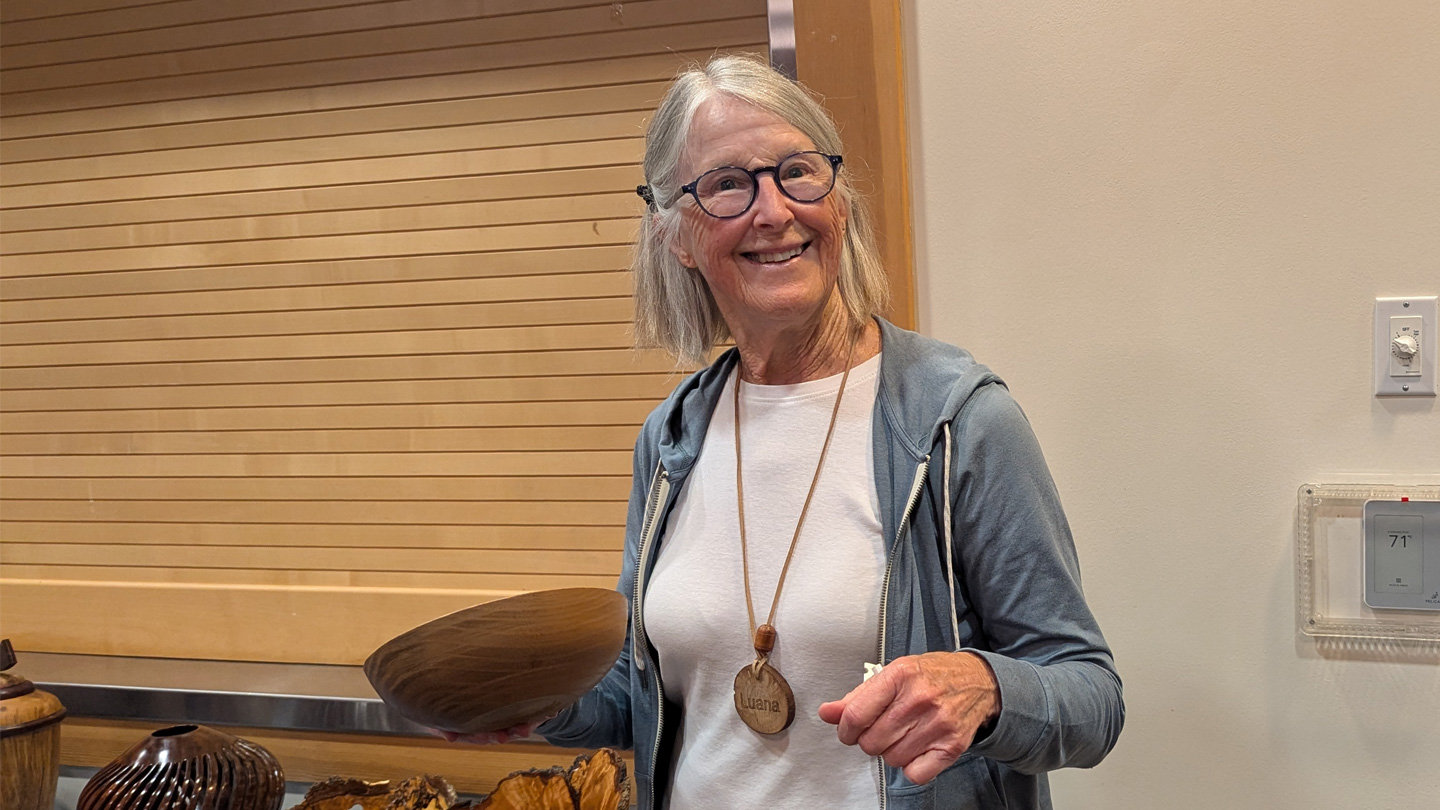
Luana Staiger made a bowl but was unsure of the wood. There were several suggestions including locust and mulberry.
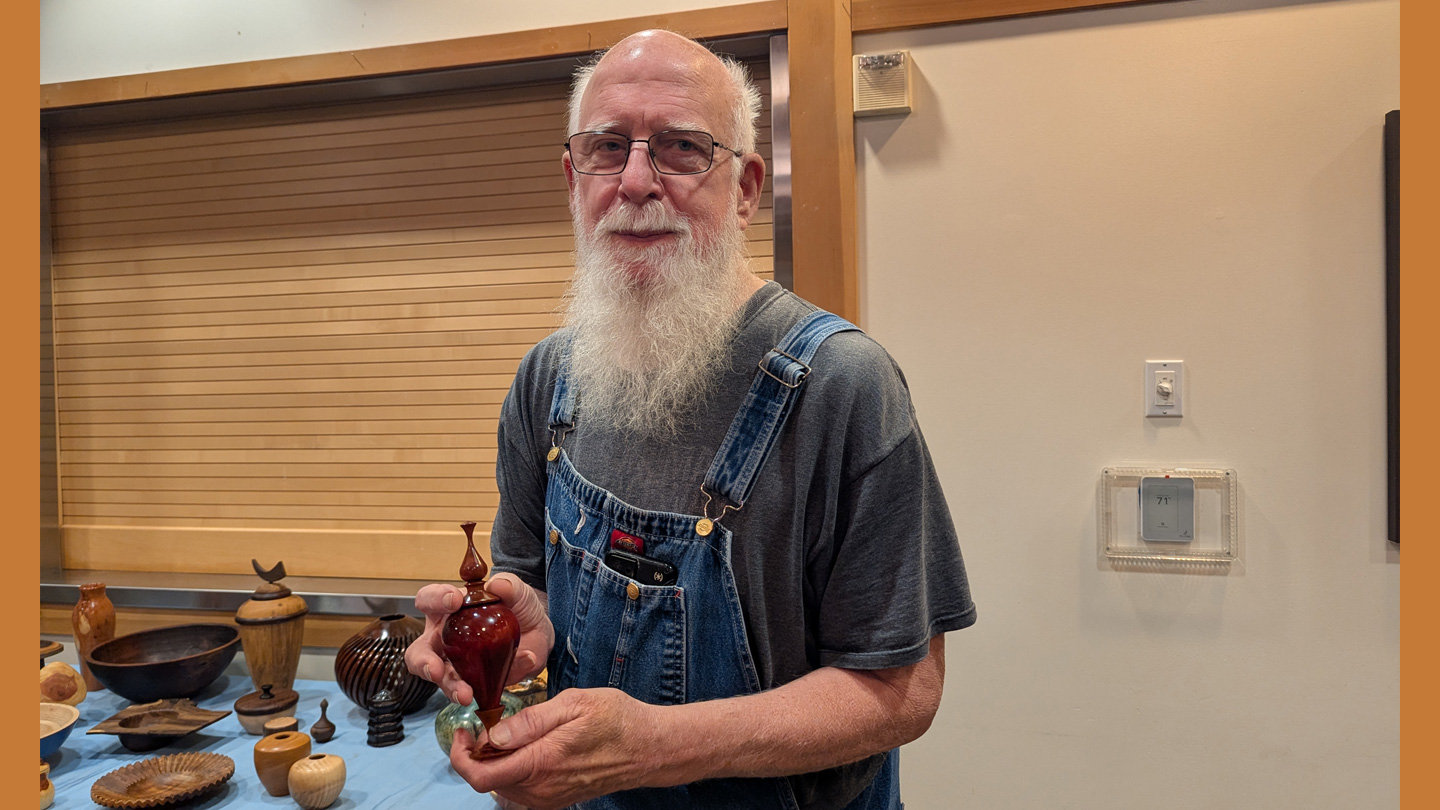
Harvey Klein made a balloon box of Sycamore dyed with four colors of the Intrinsic Colours dyes.
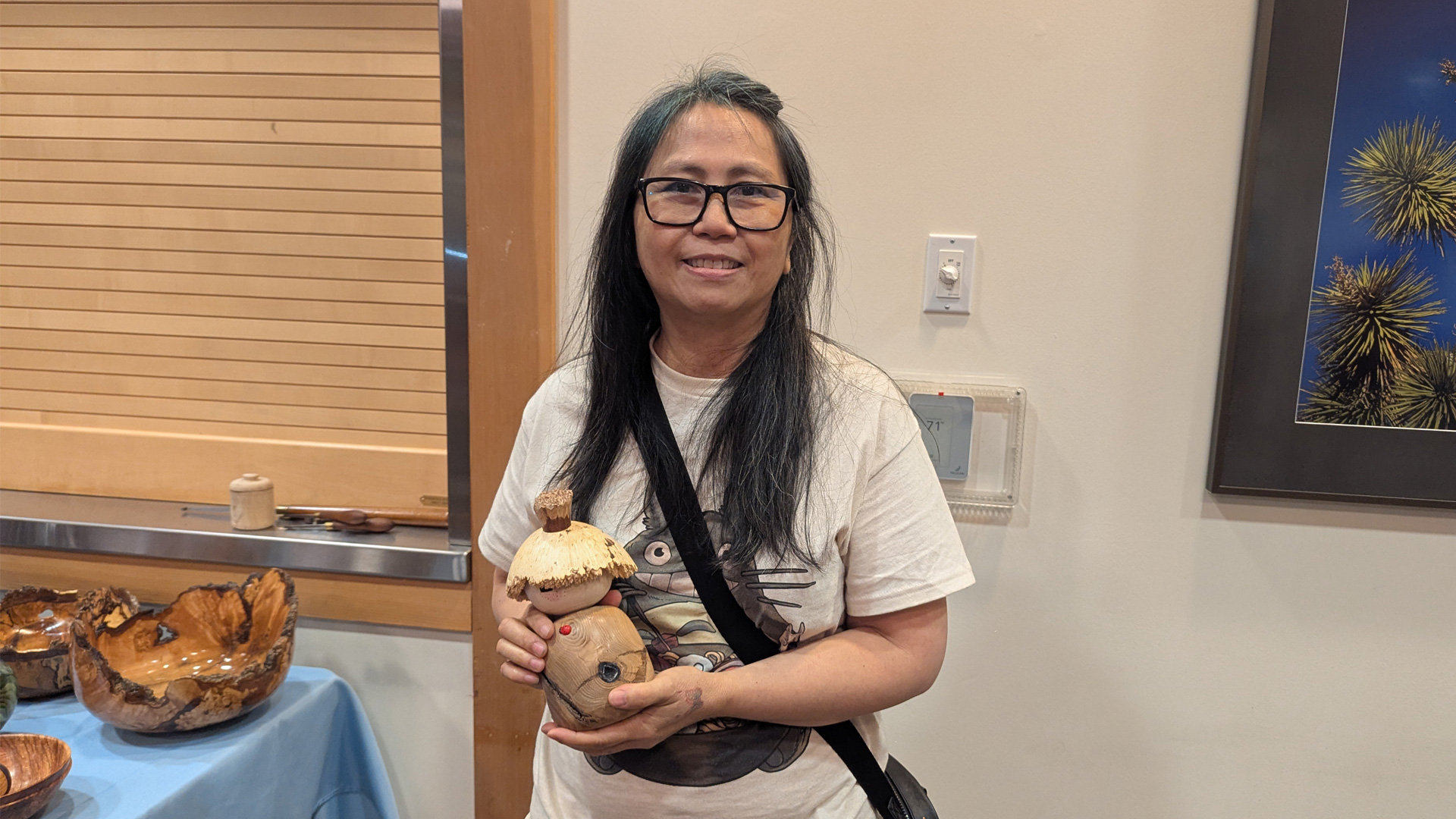
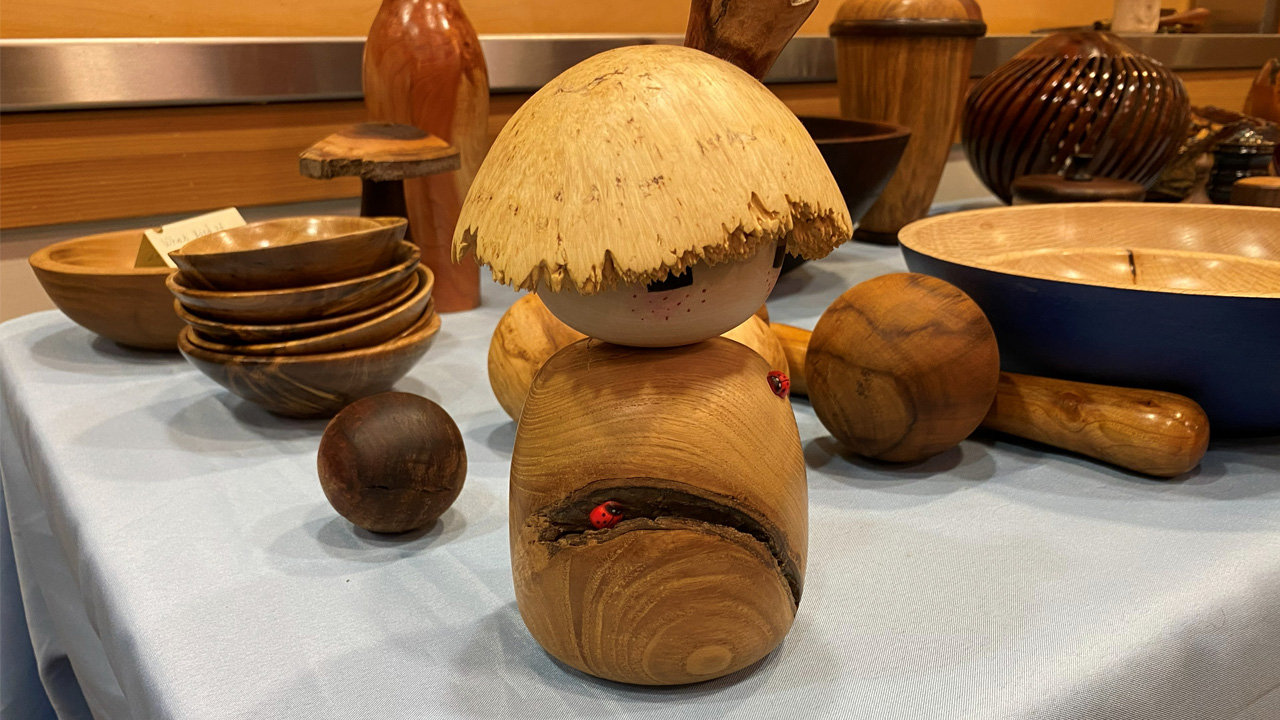
Edy Chung made a doll with turned components including natural edge hair.
Tina gave a shout-out to Angela Gunn for the impact of her WIT Turned Connections Initiative, a bead exchange, at the recent AAW symposium.
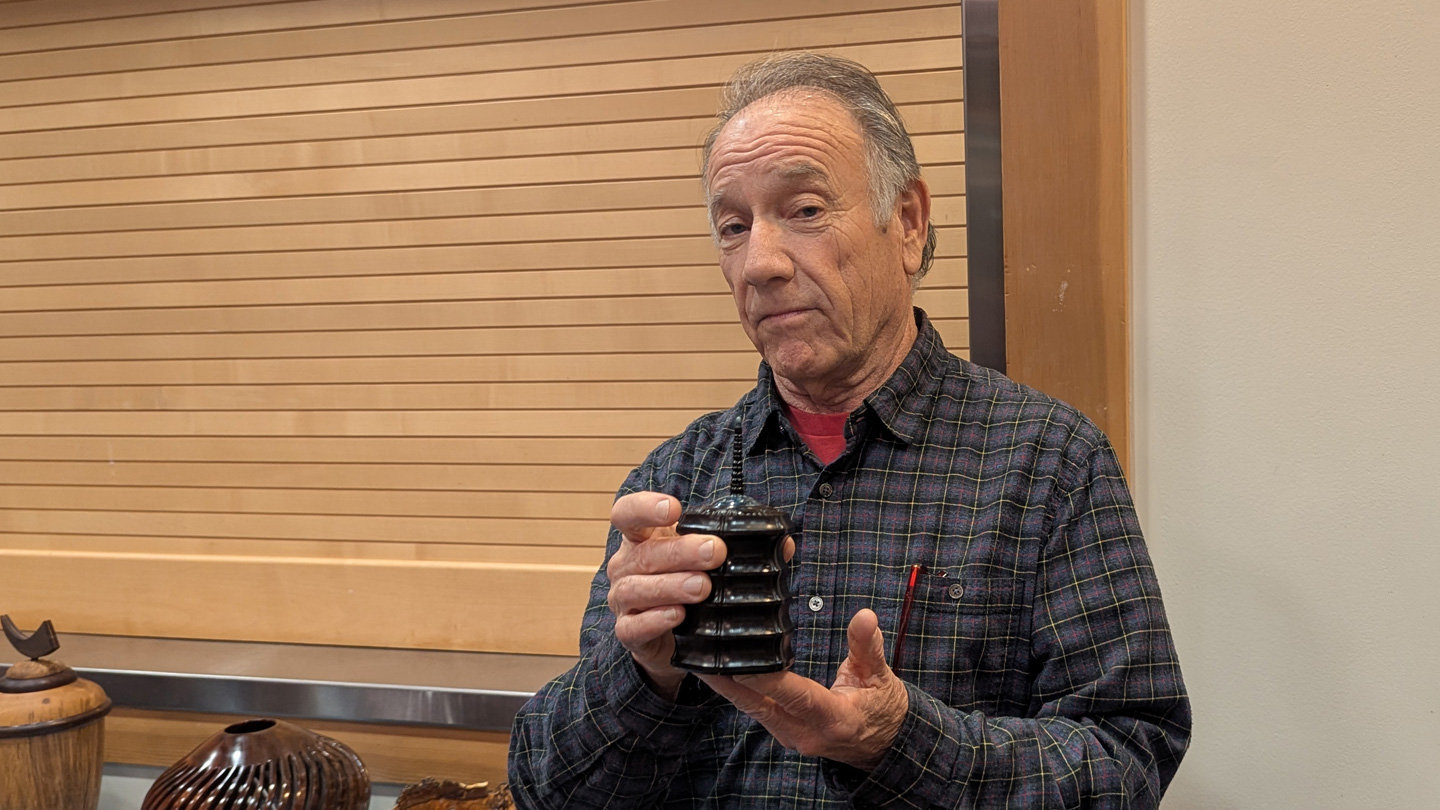
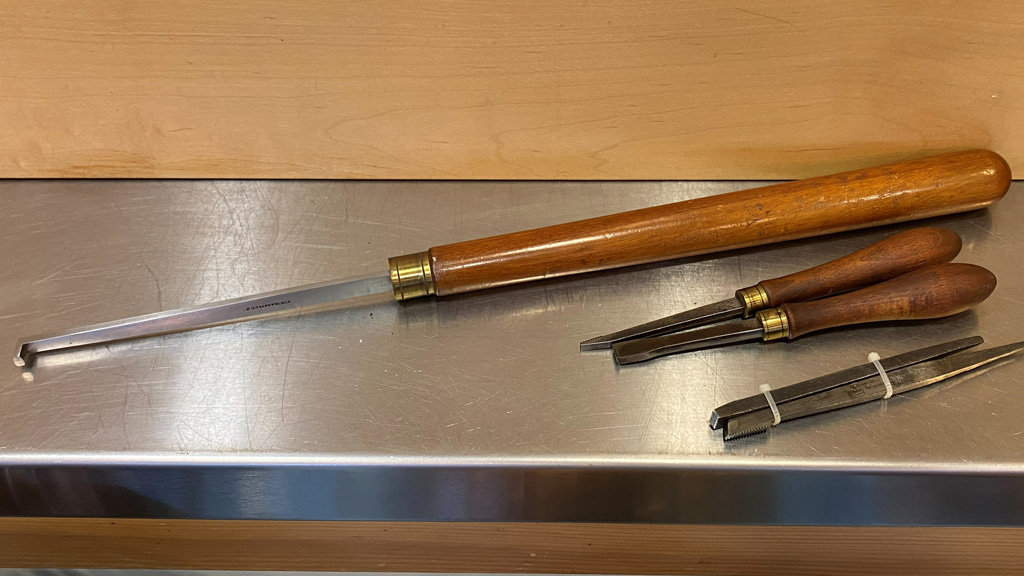
John Sauer showed some old chase thread chasing tools. He also showed a Geiger box with a spinning top box made from Blackwood and acrylic that he bought back from the collection of a collector who had recently passed away.
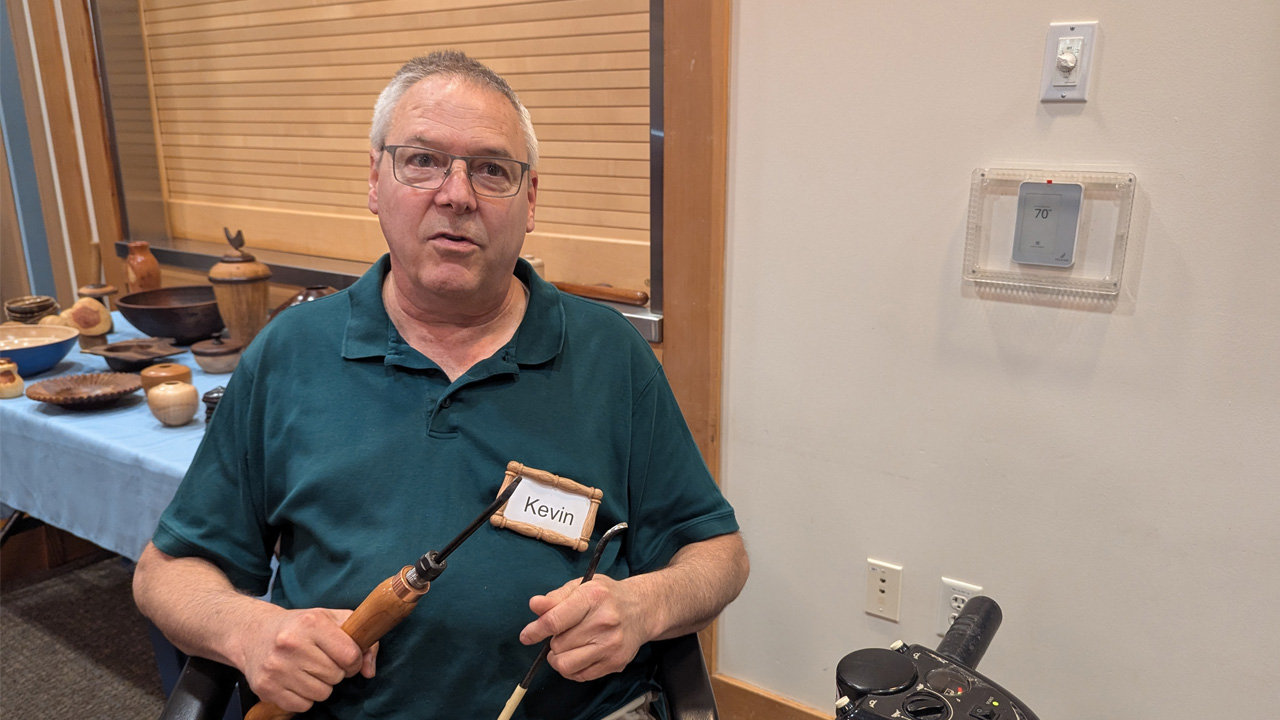
Kevin Lee showed a tool handle with an ER collet. He called out thanks to Chip Krauskopf for letting him know about ER collets and is happy that now he has a handle that will hold his 8mm hollowing tools.
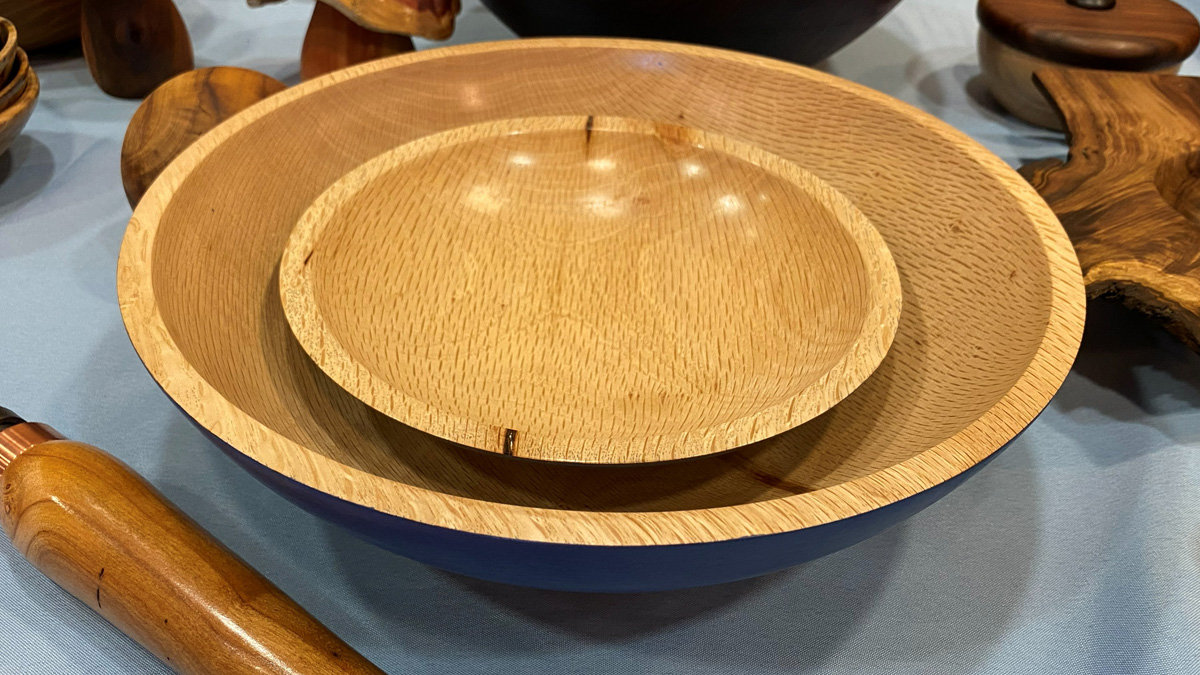
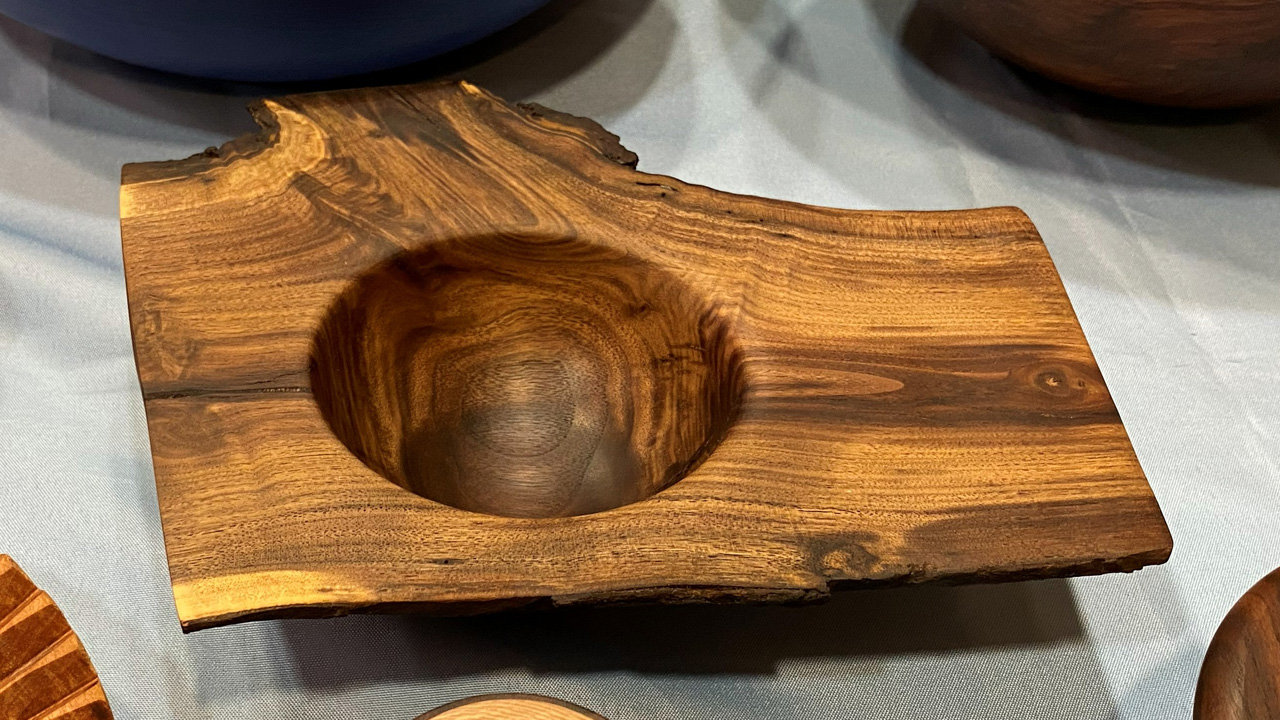
Also, check out these bowls:
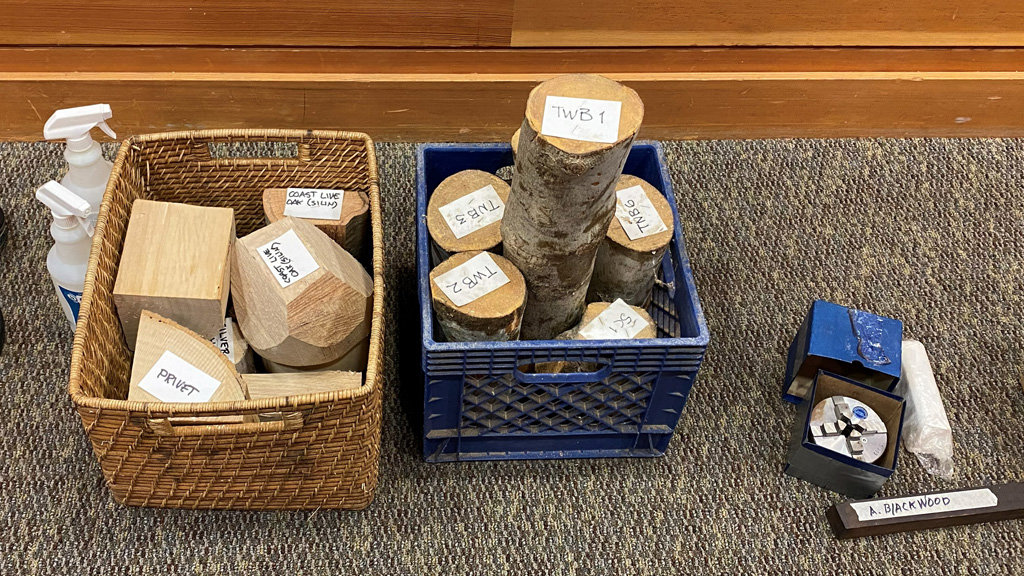
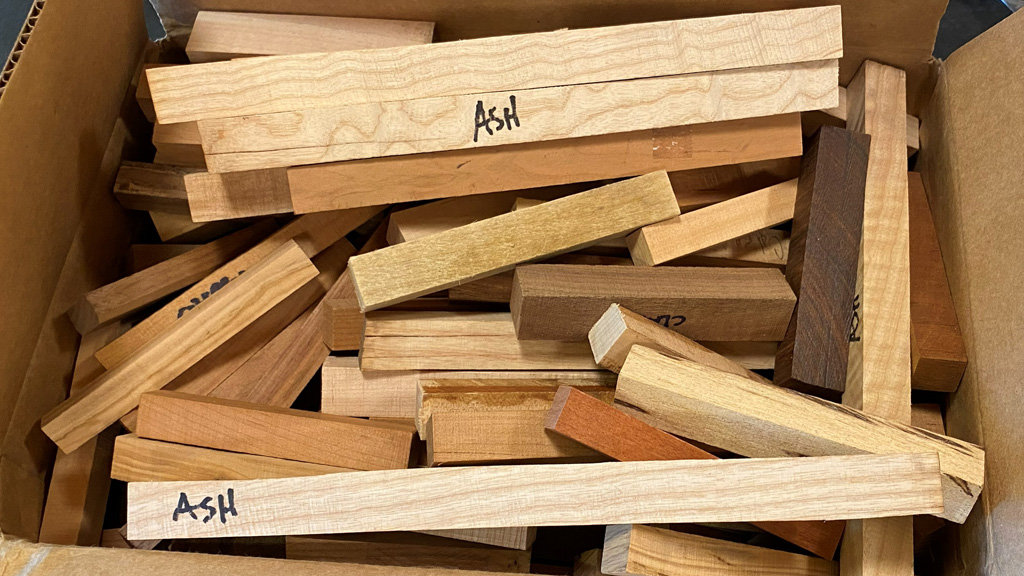
Participation Prizes
Woodturners Newsletter Editing Notes
WBW members, please let the newsletter editors know if you have a personal website, and would like it included in the President’s Challenge and Show & Tell sections of our Woodturning Newsletter. Email us at info@westbaywoodturners.com.
Board Members and Committee Chairs
President: Edgar Whipple
Vice President: Jon Bishop
Treasurer: Jim Koren
Secretary: Alison Lee
Member at Large: Bob Bley
Meeting Program Coordinator: Unfilled
Visiting Artist Coordinator: Dean Caudle (acting)
Anchor Seal: Dennis Lillis
Craft Supply: Tina
Librarian: Kelly Smith and Roman Chernikov
Audio Visual: Curtis Vose
Website: Roman Chernikov
Woodturners Newsletter: Angela, Edgar, David, Laura, and Roman
Leave a Reply
You must be logged in to post a comment.